Tulum Buyers Can Check a Development's Permits in Five Minutes. Here's How.
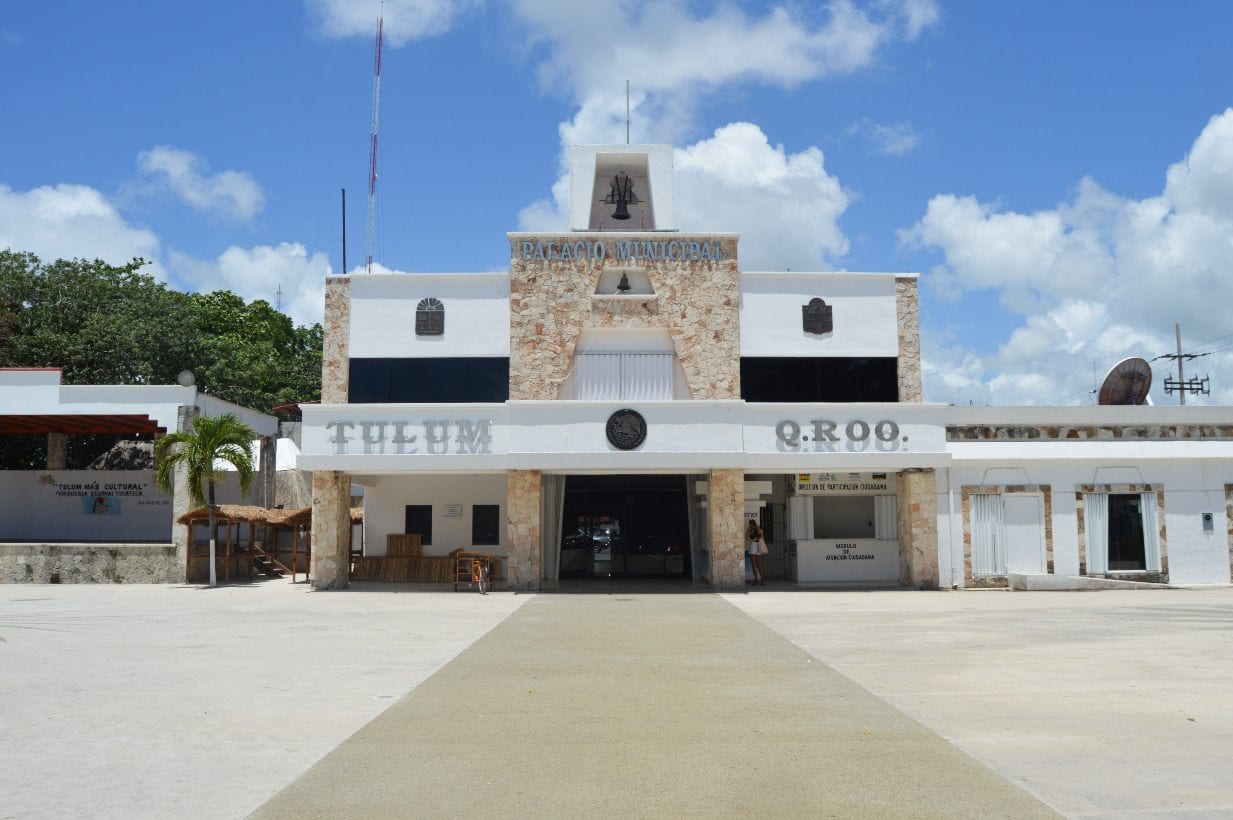


Quintana Roo publishes a public register of every property development in the state that is advertising itself without the permits to do so. Anyone can search it, from anywhere, without an account. The more useful thing about that register is not the list of names inside it. It is what the existence of the list tells you about how this market has changed, and about the specific thing that went wrong here between 2020 and 2023.
The Registro Estatal de Desarrollos Inmobiliarios Irregulares is maintained by Sedetus, the state's territorial and urban development secretariat, and sits at desarrollo.sedetus.gob.mx. It lists each development by name, alongside the date it entered the register, its current status, its locality and its municipality. A map published with it, titled Padrón de Desarrollos Irregulares del Estado de Quintana Roo, carried 111 developments when we checked it on August 28. Sedetus itself told 24 Horas on August 6 that it holds 123 developments, closed or listed, for marketing homes and lots without the required licences and permits, so the map and the official count do not match, and the figures below are our count of the map.
Tulum accounts for 29 of those 111, and that number needs its context, because the instinct is to read it as evidence that Tulum is the worst offender in the state. The register does not say that. Isla Mujeres carries exactly the same number, 29, on a fraction of the land and a fraction of the population. Benito Juárez, which is Cancún, carries 23. Othón P. Blanco carries 11, Bacalar eight, and Puerto Morelos and Lázaro Cárdenas five each. Twenty-five of Tulum's entries sit in Tulum proper, three in Francisco Uh May and one in Macario Gómez. This is a state-wide phenomenon that arrived wherever land was selling quickly, and Tulum is one of two places at the top of it rather than the whole story.
The wording of the accusation matters. Every one of the 111 entries cites the same grounds: contravening articles 80 and 81 of the state's Ley de Asentamientos Humanos, Ordenamiento Territorial y Desarrollo Urbano, by carrying out advertising and marketing activity toward a sale without holding the Constancia de Congruencia Urbanística Estatal, or the municipal licences and permits that go with it. That is a charge about the right to sell, not a judgement on the concrete. A project on this list is not being called badly built. It is being called not yet entitled to take your money.
What that moment actually attracted
The register is dated, and the dates tell the story better than any commentary. One hundred and three of the 111 entries were added during 2025, against six dating back to August 2019. The listings are not the beginning of the problem. They are the state catching up with something that had been building for four years by the time anyone counted it.
What it was catching up with was a scale of construction the municipality had never handled. Miguel Ángel Lemus Mateos, president of the Real Estate Council of Quintana Roo, put the number of developments under construction in Tulum at 560. His summary of how it happened is the most honest sentence anyone in the industry has offered: “There was no legal certainty. No infrastructure certainty. And yet the growth didn't stop.”
That combination is what drew the wrong people. A destination went from a road with hotels on it to a global search term in about eighteen months, during a period when demand seemed limitless and money was cheap. That attracts serious builders, and Tulum got plenty of those. It also attracts people whose ambition runs a long way ahead of their experience, and people whose interest in a place is extractive rather than additive. Some had never run a build programme. Many sold presales against schedules nobody had tested, on land whose permitting status they had not resolved, in the reasonable-seeming belief that the sales would keep coming and the paperwork would catch up.
Then the sales stopped. Demand fell away from its pandemic peak while construction obligations, contractor invoices and delivery dates carried on exactly as before. That is the squeeze that produced most of what went wrong here, and it is worth saying plainly that a good deal of it was not dishonesty at the outset. It was people who took on more than they could carry and could not admit it fast enough, which in a presale market has the same effect on a buyer as bad intent.
A minority of cases were something else entirely. Bloomberg documented one operator that marketed six projects covering 245 units, delivered a single building of 30, left two more part-built, and left roughly 70 presale buyers unaccounted for with more than fifteen million dollars missing. Those cases are real, they are a small share of the total, and conflating them with the much larger group who simply overreached does a disservice to both the buyers and the builders still doing this properly.
The register is a status, not a sentence
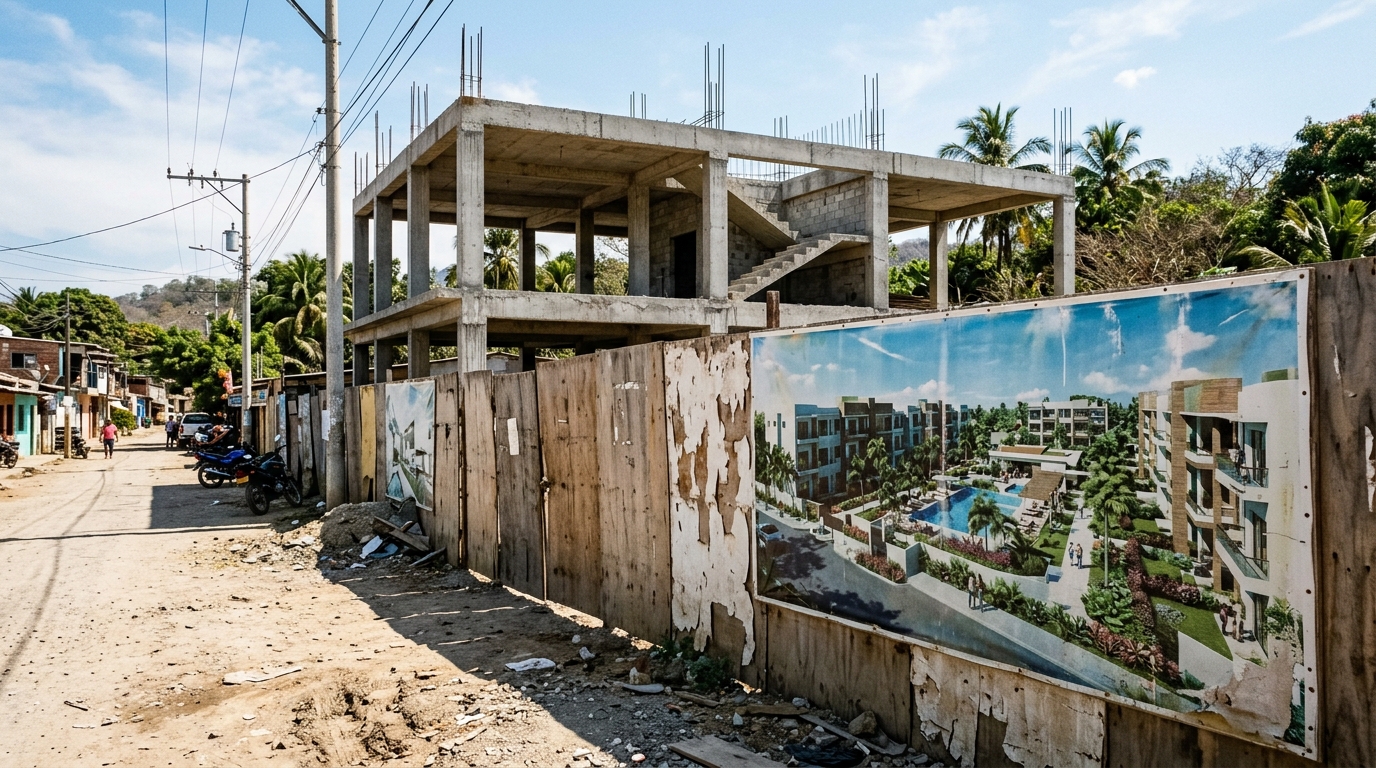
Here is the part most coverage misses. Every one of the 111 entries currently reads “Irregular,” and that is not because nothing ever changes. It is because a development that regularises its position is removed from the register altogether. In September 2025, Sedetus listed 26 developments in Tulum and then, within days, removed 14 of them after they demonstrated full compliance: permits, authorisations, urban impact assessments and environmental documentation. Those 14 are not marked as cleared on the list. They are simply not on it.
That makes the register a live status rather than a permanent judgement, and it changes how you should read it. A name on the list today may be a project whose paperwork is three weeks from complete. A project absent from the list has not been certified as sound by anybody; it has only not been caught marketing without entitlement. The register tells you one specific, checkable thing, and treating it as a verdict on quality is a misuse of it.
How to check a development yourself
Search the register by the development's registered name rather than its marketing name, since those frequently differ and a project sold under a brand is often registered under a company. Note the date of entry, because an entry from 2019 and one from last month describe very different situations. Check the municipality and locality fields against where the project actually sits, since Tulum municipality extends well beyond the town. Then ask the developer for the Constancia de Congruencia Urbanística Estatal and the municipal licences by number, and verify those with the municipality rather than accepting a photograph of a document.
Gabriela Peña, Sedetus's director of real estate affairs, has been unambiguous about the sequence: consult before buying, not after, and work through advisors accredited with the state. Her department reported three complaints from foreign citizens this month, two in Tulum and one in Playa del Carmen. All three concerned failures to deliver on time rather than confirmed fraud, which is a fair description of the residue this period has left behind.
What this does and does not prove
It does not prove the problem is solved. One hundred and eleven developments across the state is a substantial number, and the most recent entries on the published map date from November 2025, meaning either that new listings have slowed considerably or that the map lags the register it illustrates. Both readings are worth holding until the next update.
What it does prove is that the instrument now exists, that it is public, and that using it costs nothing. For a market that spent four years with, in Lemus's phrase, no legal certainty, a searchable state register is not a small thing. It is the difference between a buyer relying on a broker's assurance and a buyer being able to check for themselves, and the second is the only version of this market with a future.
Sources: Registro Estatal de Desarrollos Inmobiliarios Irregulares and the accompanying Padrón map, Secretaría de Desarrollo Territorial Urbano Sustentable, Government of Quintana Roo, consulted 28 August 2026. Sedetus statements reported by 24 Horas Quintana Roo, 6 August 2026. Developments under construction per the Real Estate Council of Quintana Roo. Presale fraud case as documented by Bloomberg.
Corrected 5 October 2026: an earlier version of this article gave 111 as the number of developments on the register. Sedetus told 24 Horas on 6 August 2026 that it holds 123; 111 is the number we counted on the published map on 28 August, and the breakdown in this article is based on that map.
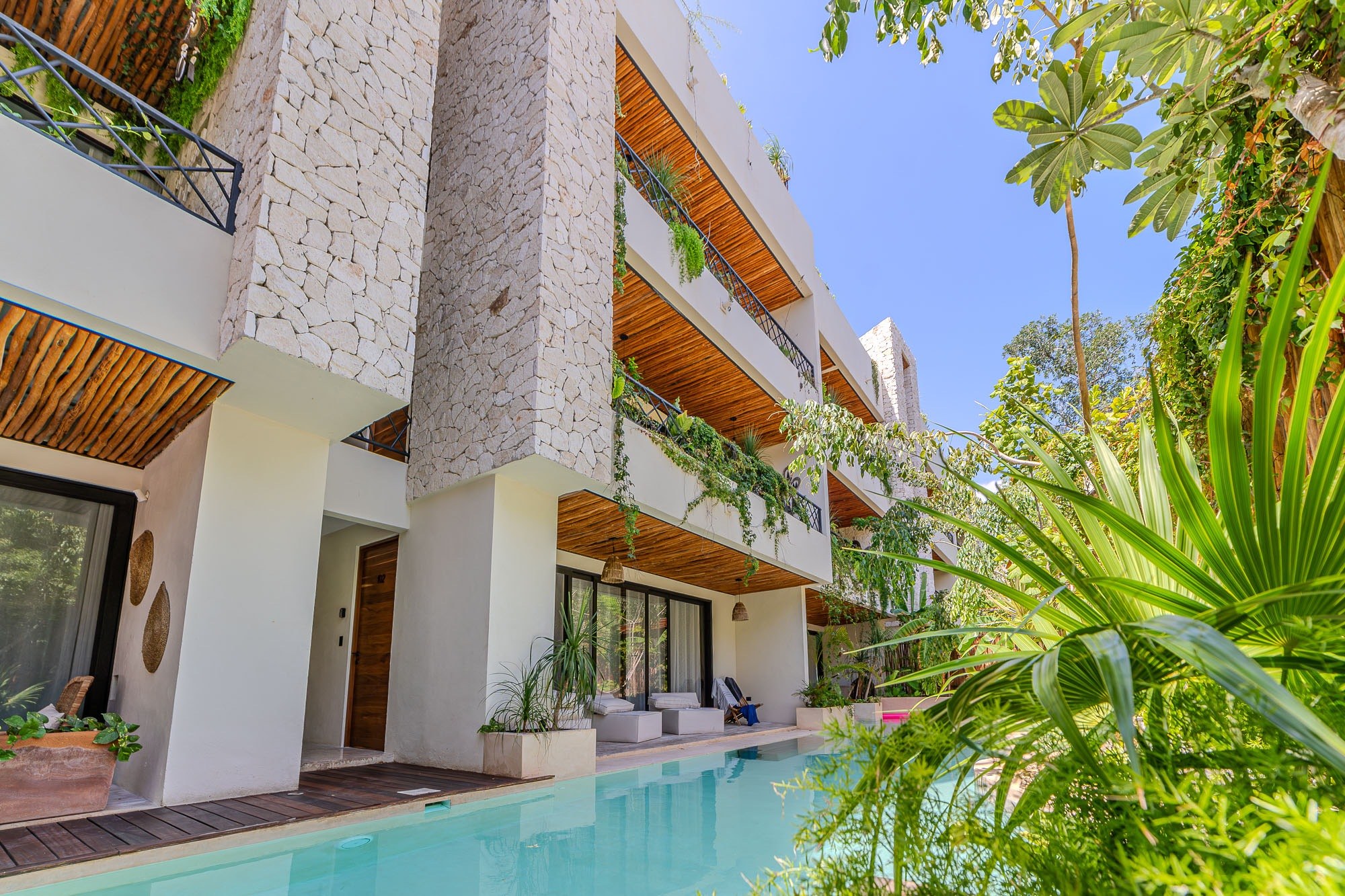
Itza II | 2 Bedroom Furnished Apartment with Private Jacuzzi in Aldea Zama, Tulum
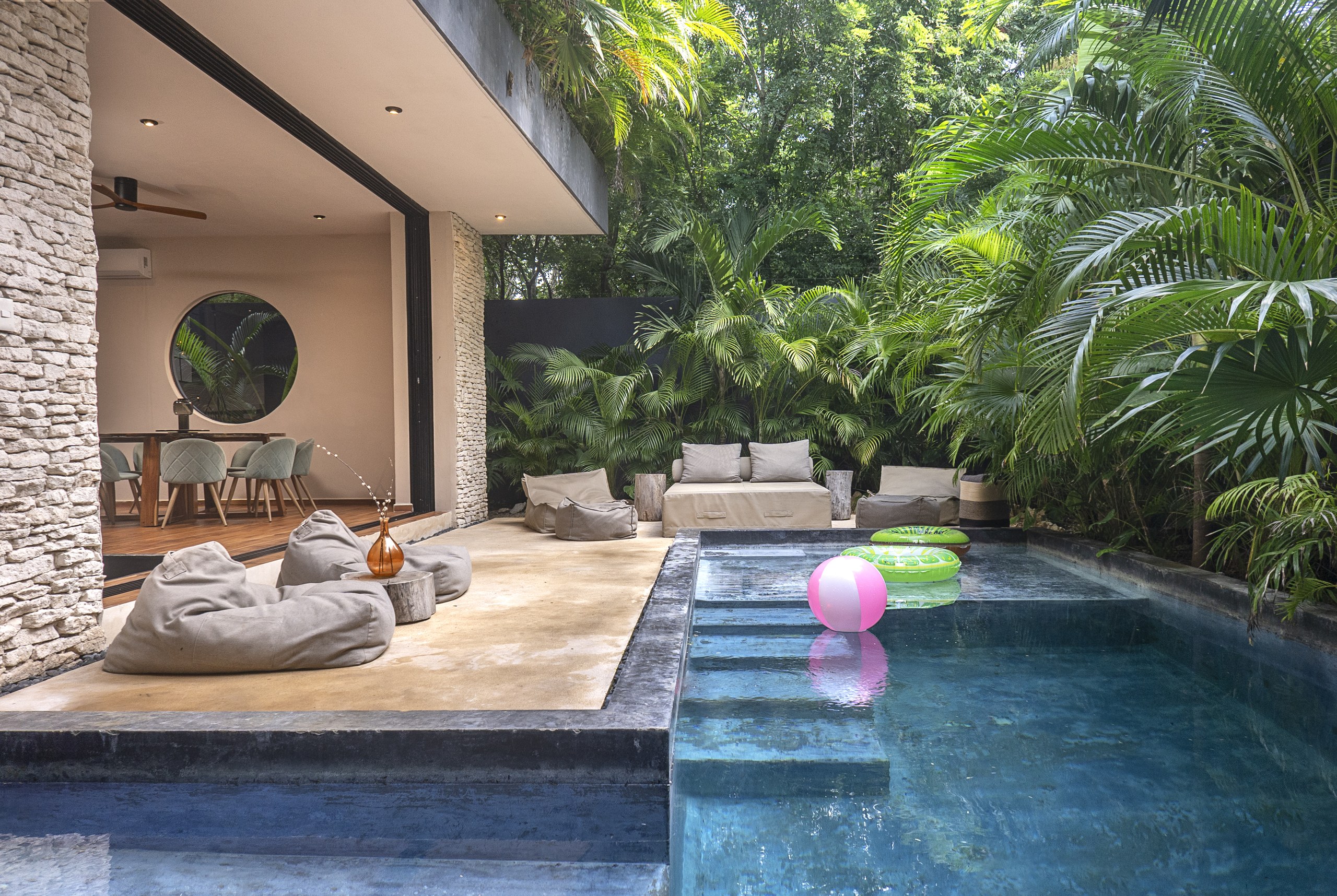
Maison Siscolino | 4 Bedroom Villa with Swim Up Pool and Rooftop Plunge Pool in Region 15, Tulum
Maison Siscolino, Region 15 Tulum. Furnished four bedroom villa, 245 m² on a 301 m² lot with swim up pool and rooftop plunge pool.
Follow our Tulum market reporting in Google.
Add to preferred sourcesWe are the ultimate guide to invest in Tulum
The complete guide to buying property in Tulum. Find homes for sale, condos or land and consult with an experienced real estate advisor.
News: Real Estate, Lifestyle and Growth Across the Riviera Maya
The latest from Tulum, the Riviera Maya and the Mexican Caribbean, from market trends and investment opportunities to lifestyle and the infrastructure shaping the coast.