
Solar Energy and Battery Storage for Tulum Properties
Engineered systems for homes, villas, hotels and developments across the Riviera Maya. Grid-connected, hybrid, or fully independent of the utility.
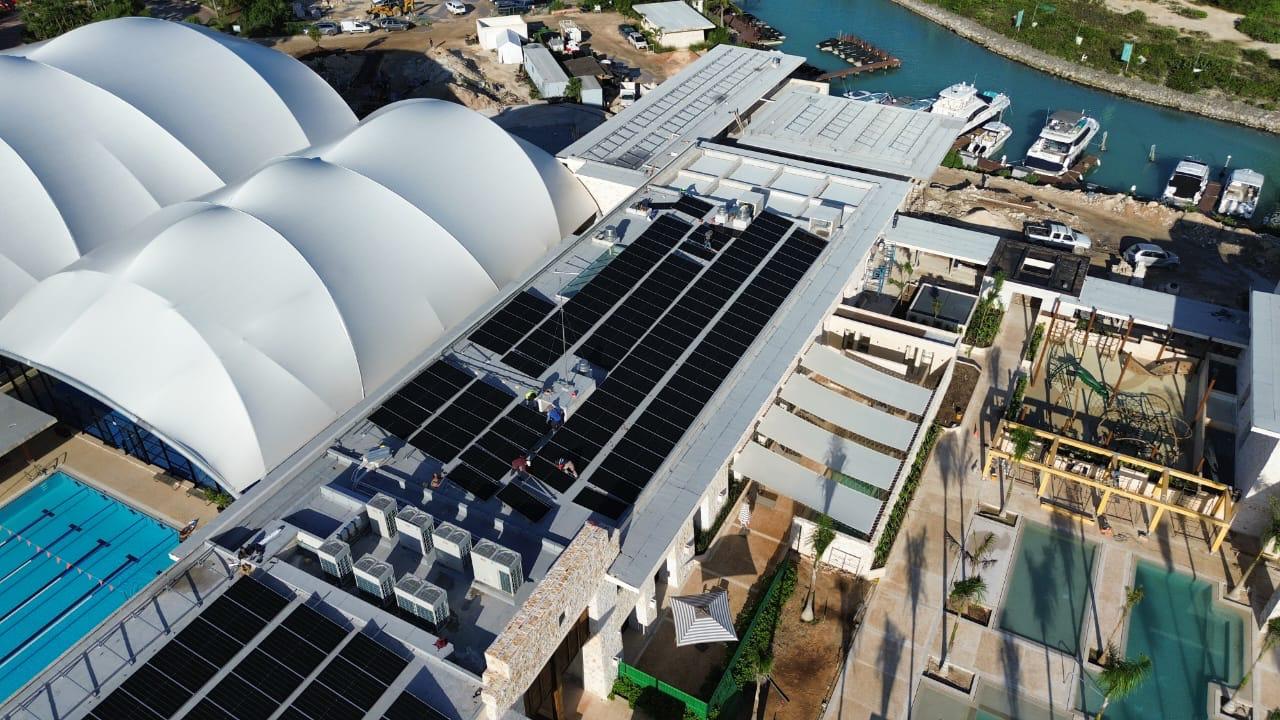

In Tulum, air conditioning decides the electricity bill. A villa running three or four mini-splits through a Yucatán summer draws most of its power during the exact hours the sun is strongest. Generation and demand line up, which is what makes solar genuinely effective on this coast rather than merely viable.
Two other conditions shape what gets built. A large share of land in the region sits beyond the reach of the utility network, so a lot with no connection needs generation and storage designed in from the beginning rather than added later. And the coast is hard on hardware. Salt air, humidity, and hurricane season all factor into how a system is specified, mounted, and protected. None of that is solved by counting panels. It is solved by measuring the actual load first. UNESOL holds an operational presence in Tulum alongside Mexico City and the State of Mexico, so the team works on the peninsula rather than travelling to it.
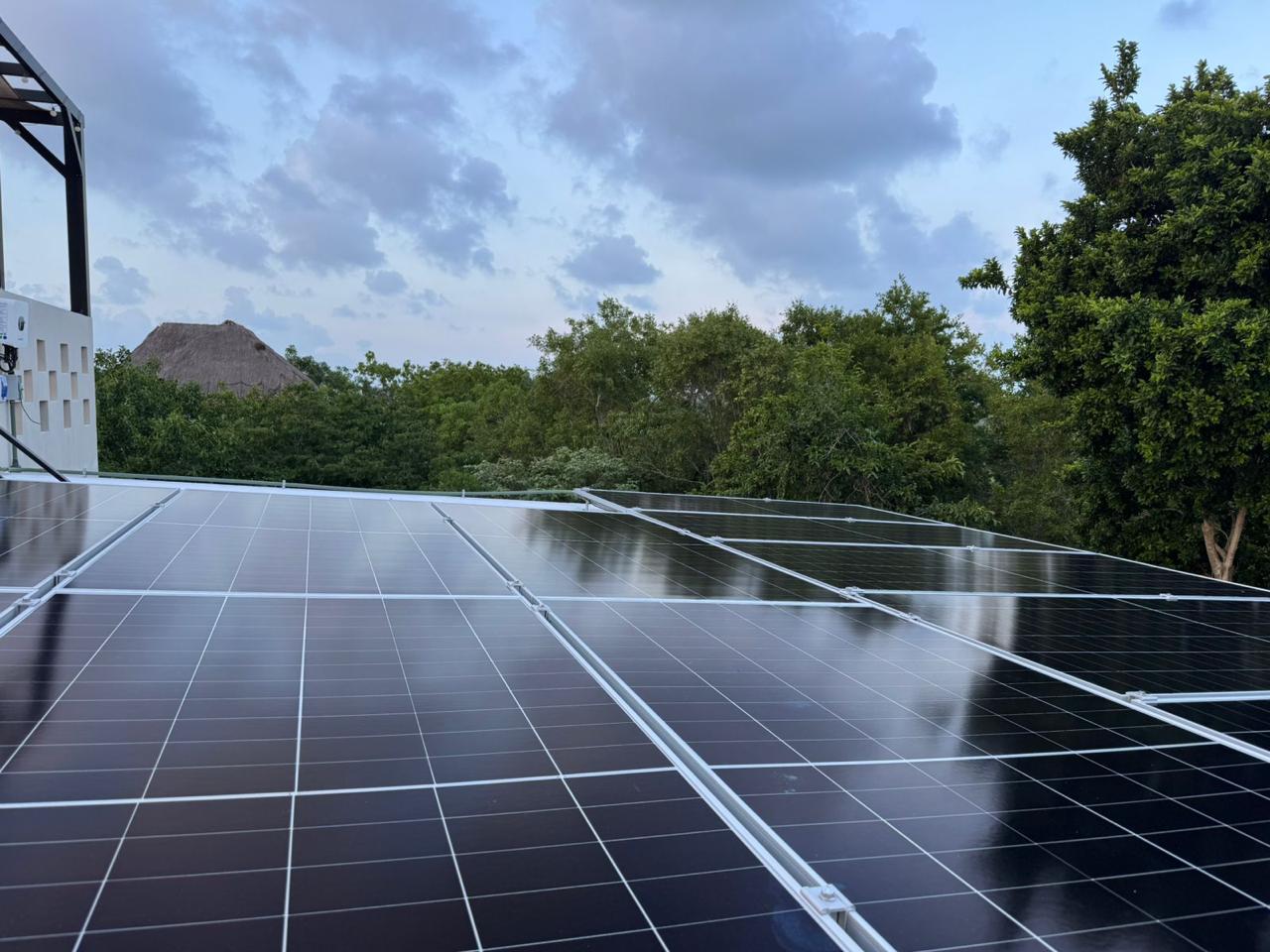
Experience and execution capacity
20+ years
In engineering, electrical installation and photovoltaic systems
750+
Projects completed across residential, commercial and industrial sites
14.5 MW
Photovoltaic generation capacity installed to date
The details that decide how long a system lasts
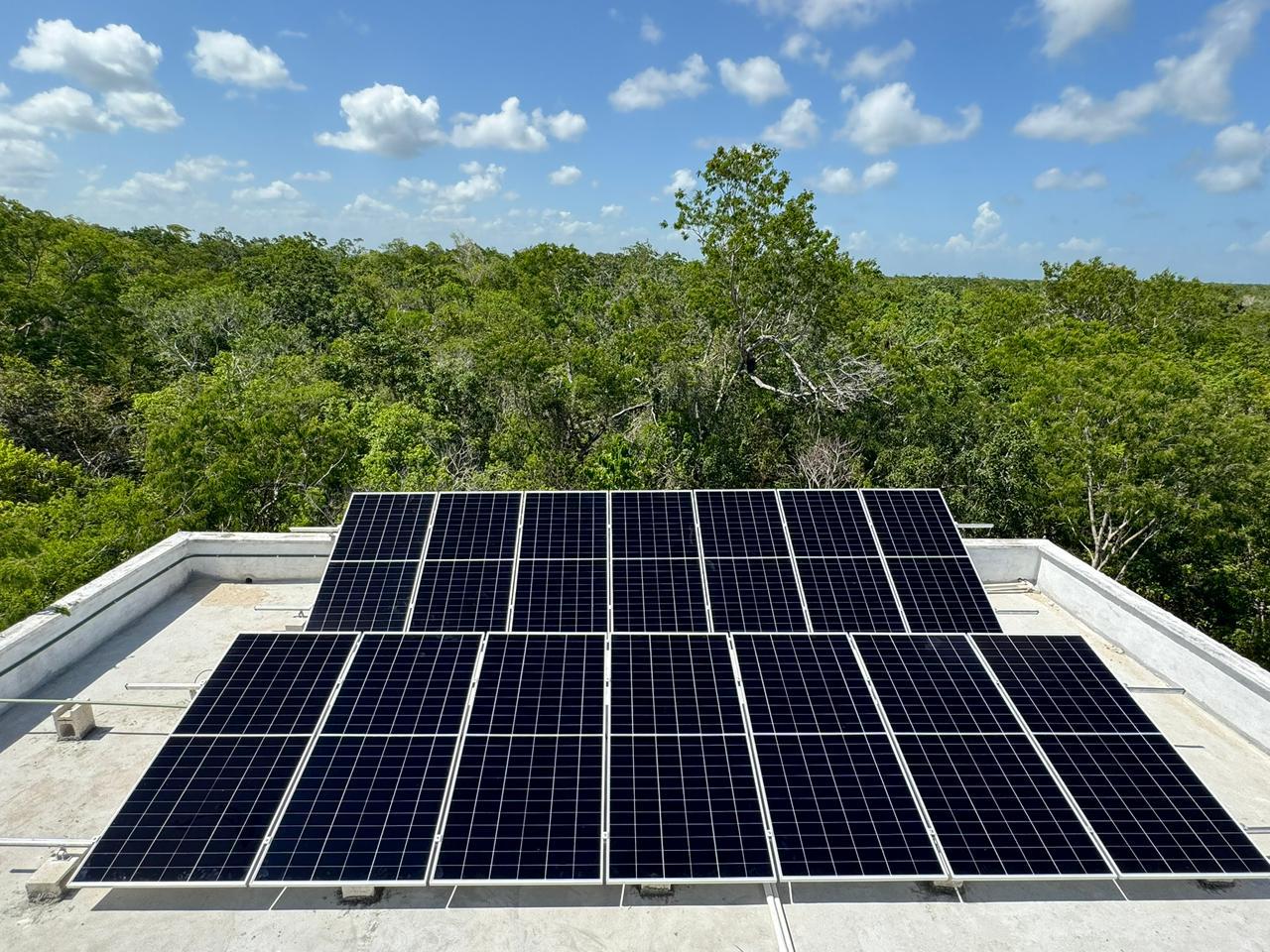
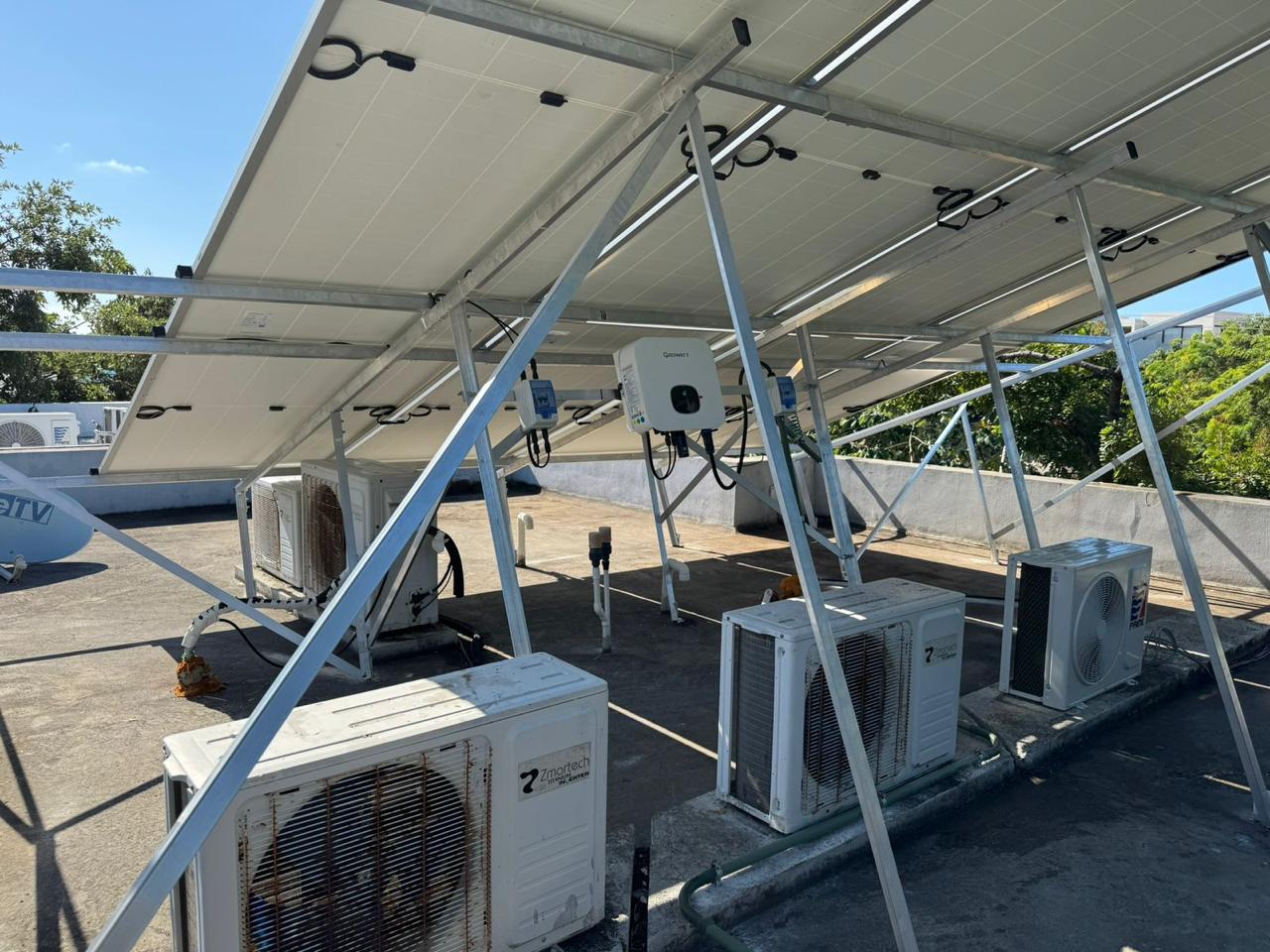
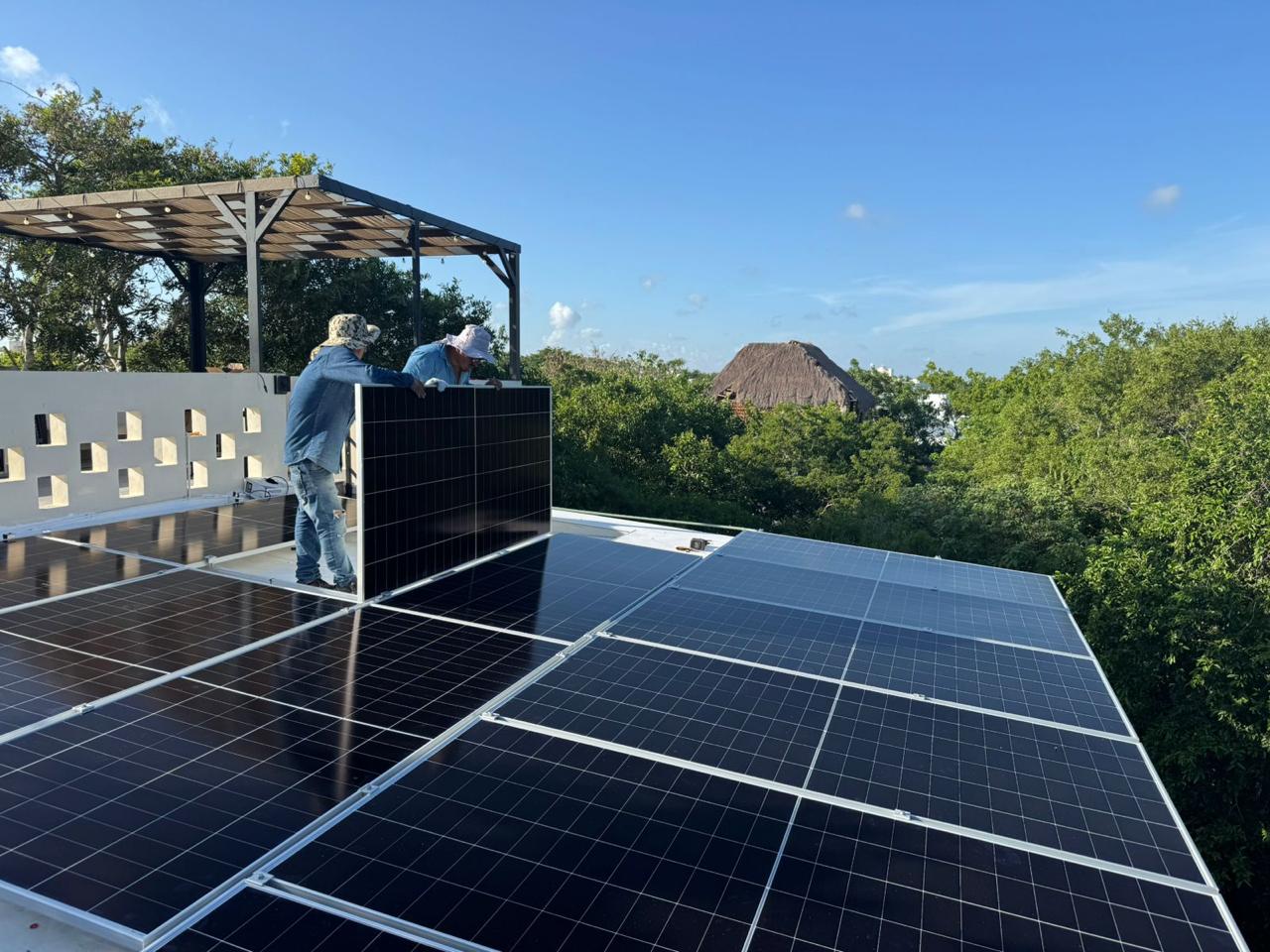
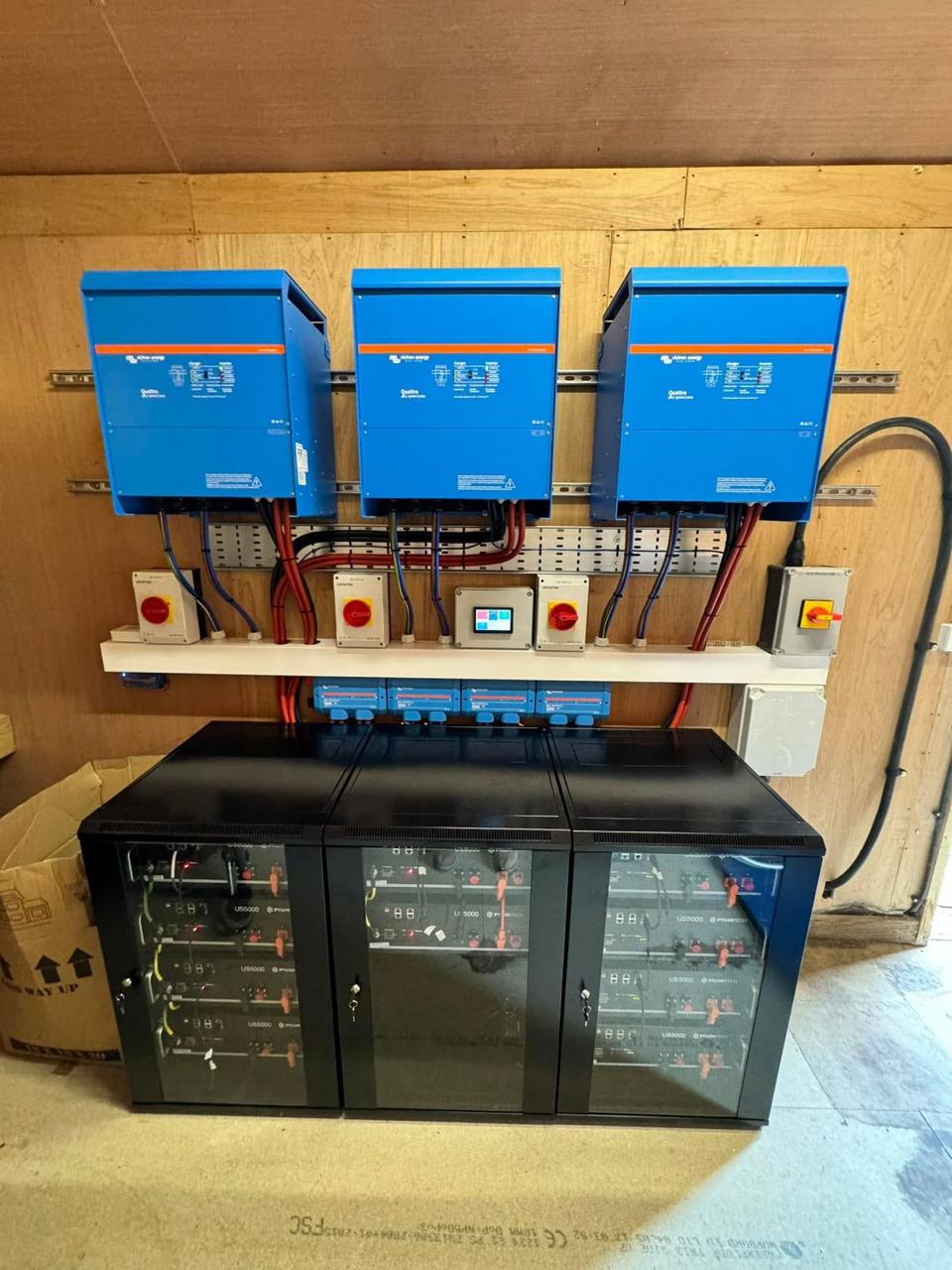
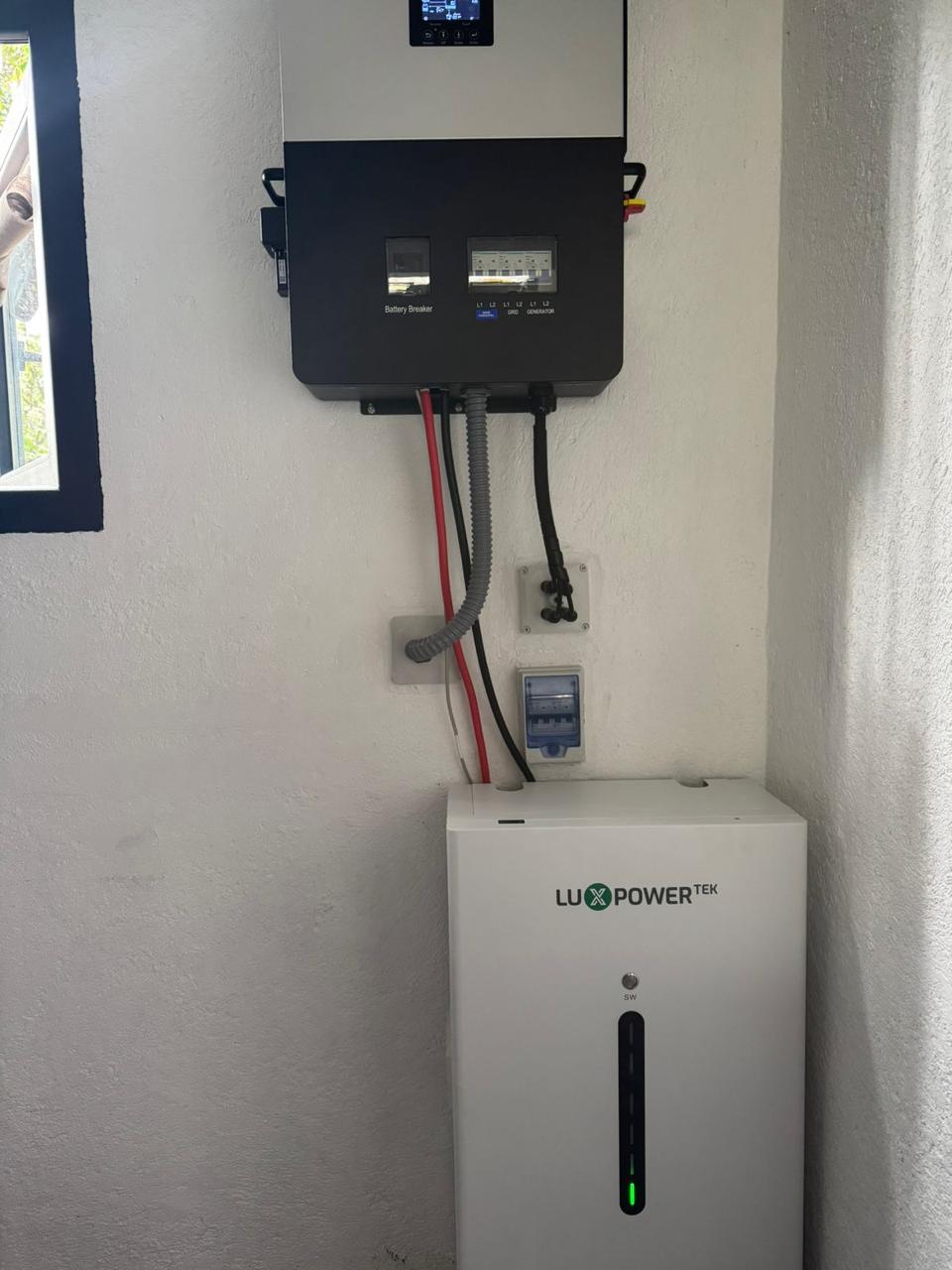
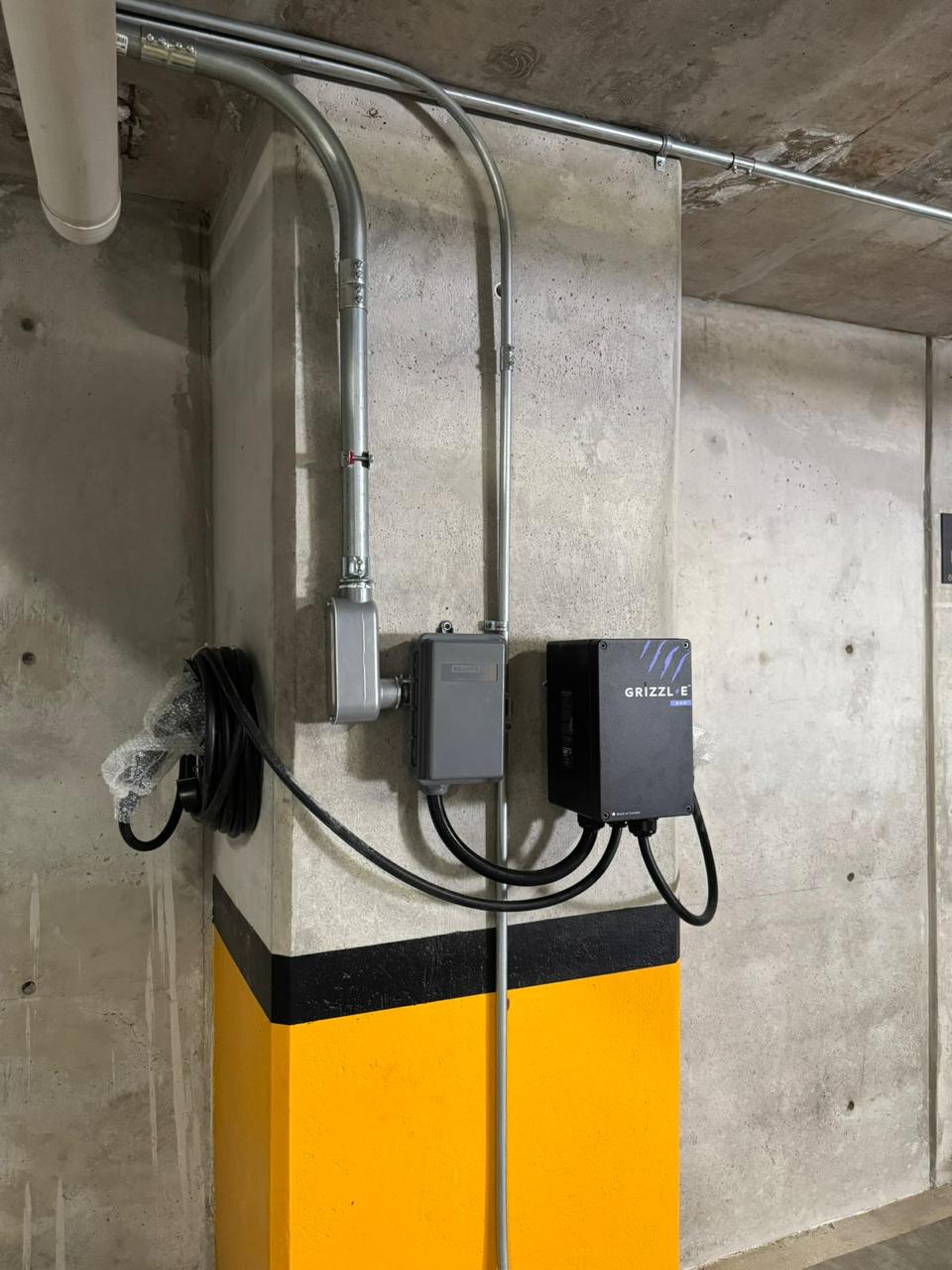
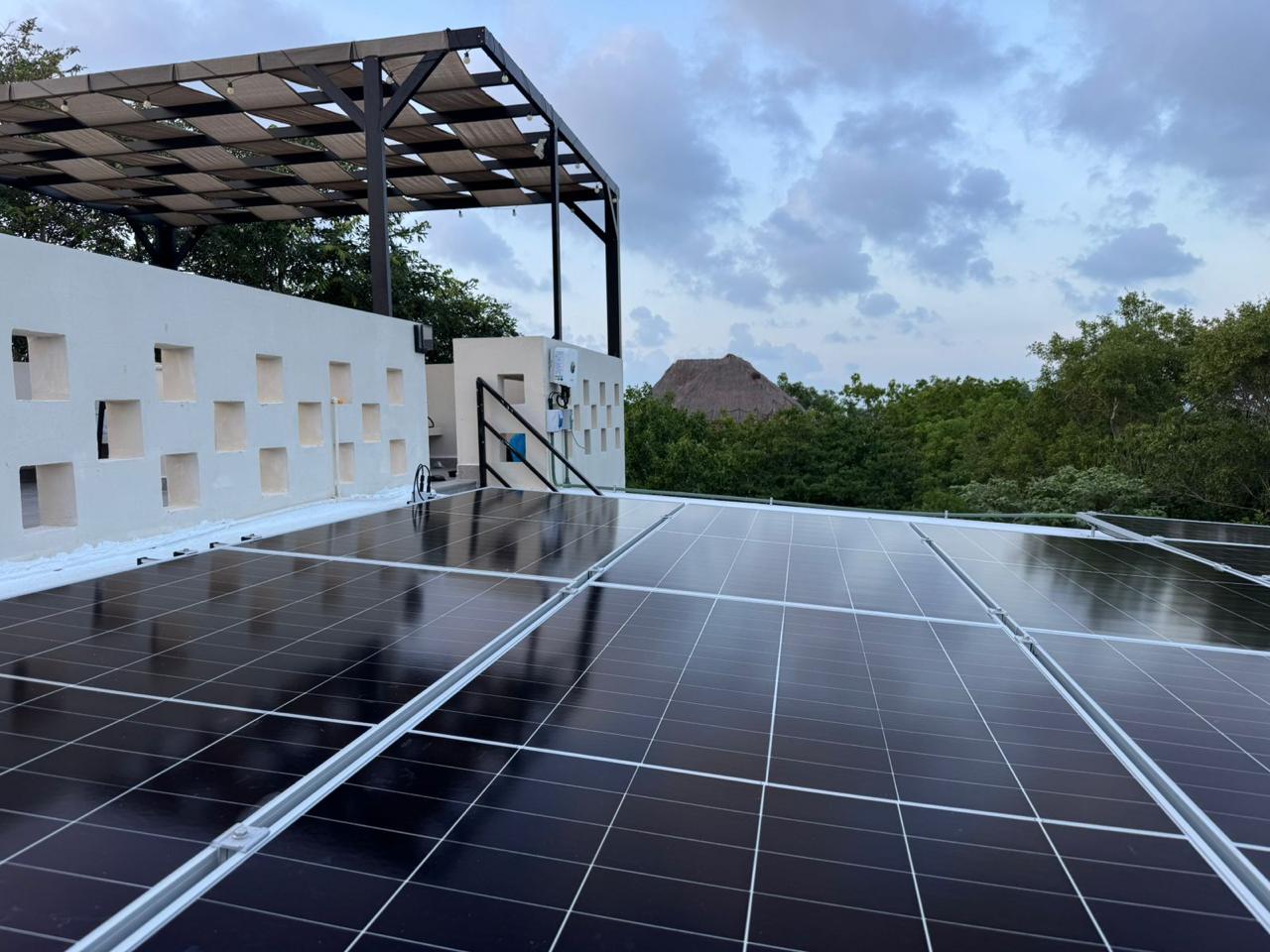
Most solar quotes in this region describe the same panels and the same inverters at much the same price. What separates one installation from another is everything decided around that equipment. Heat derates output, humidity and salt air attack terminals and fixings, and a rooftop that bakes all afternoon punishes anything mounted carelessly. The details below are visible in the photographs rather than claimed in a brochure.
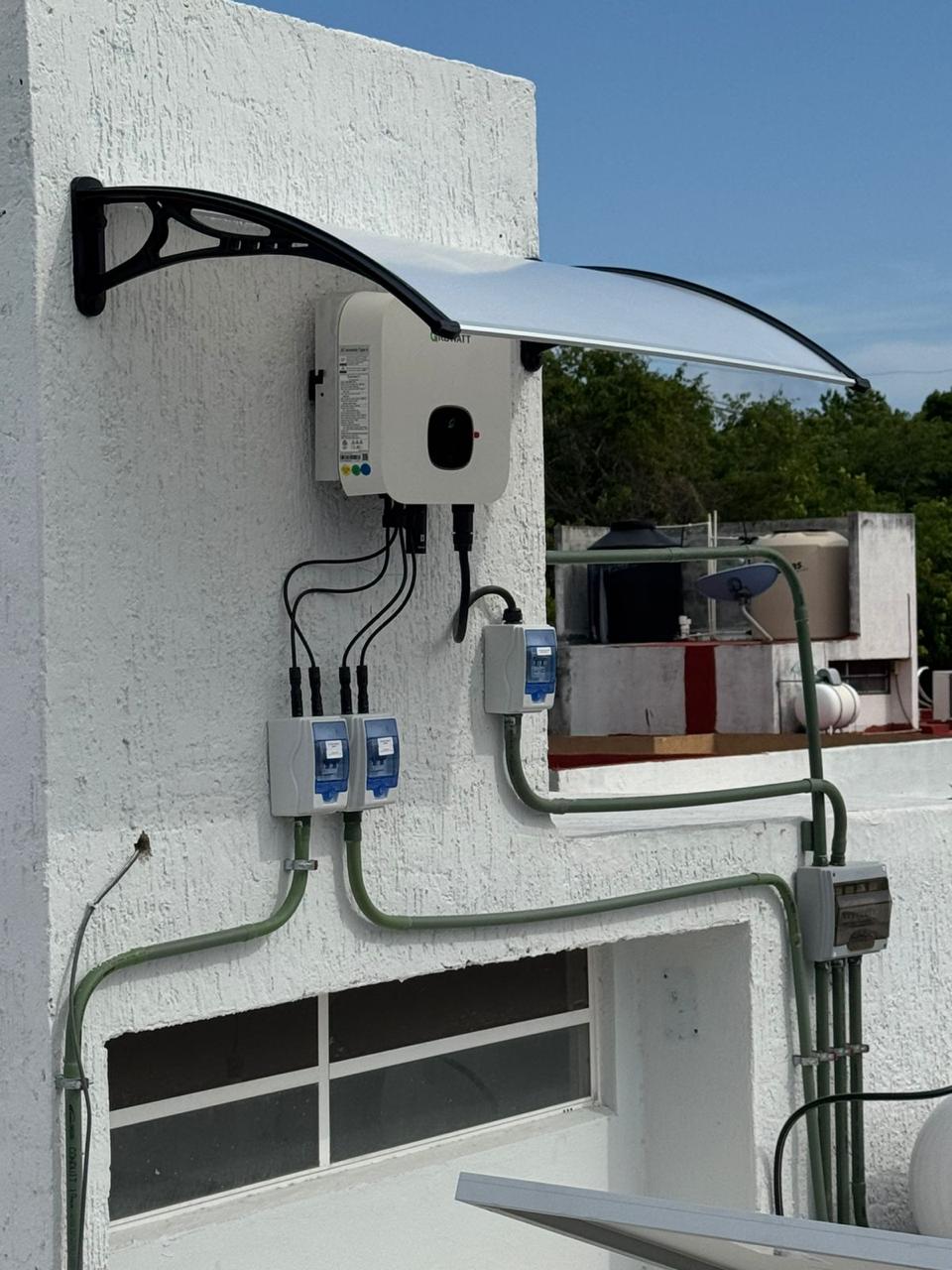
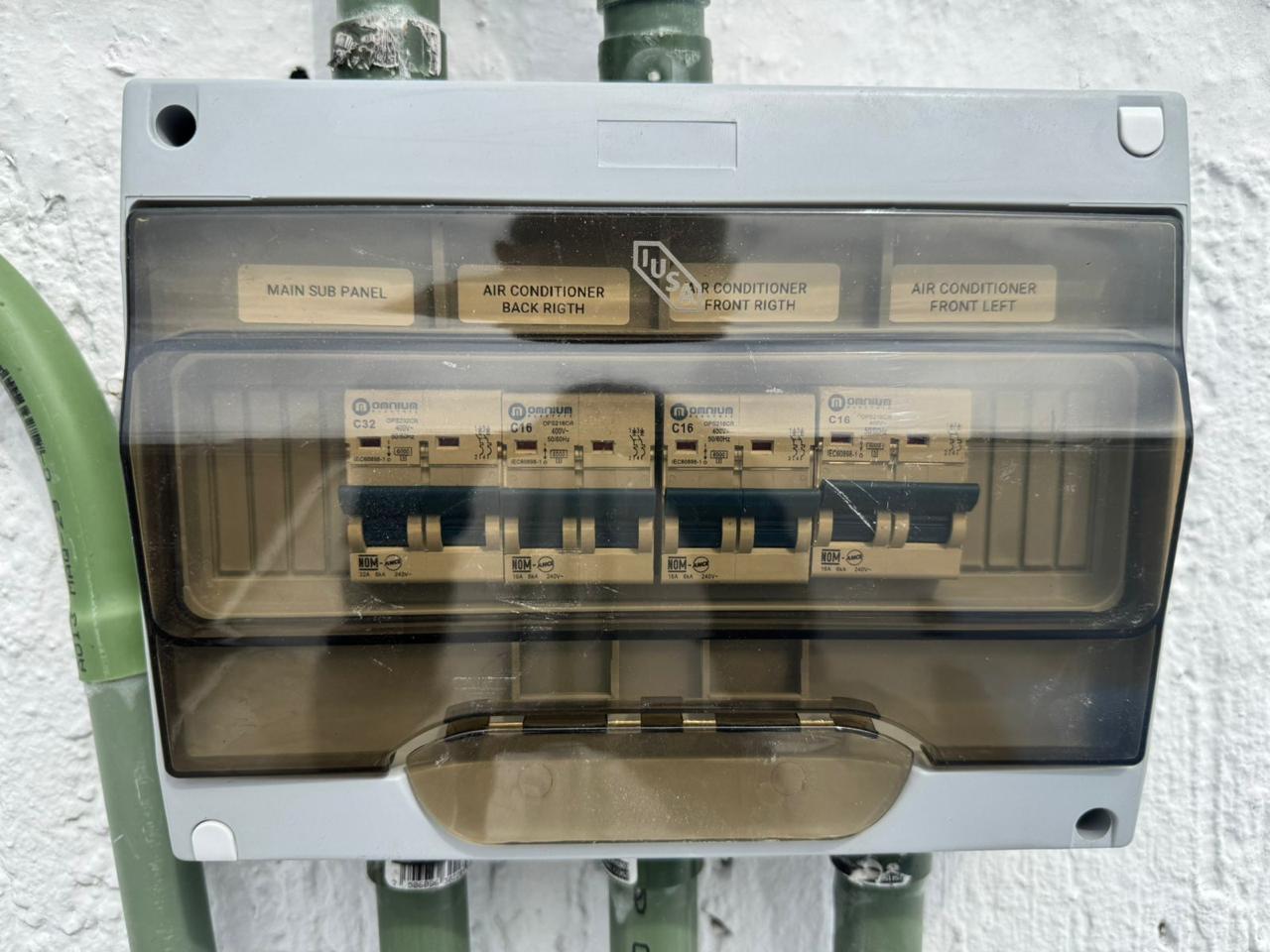
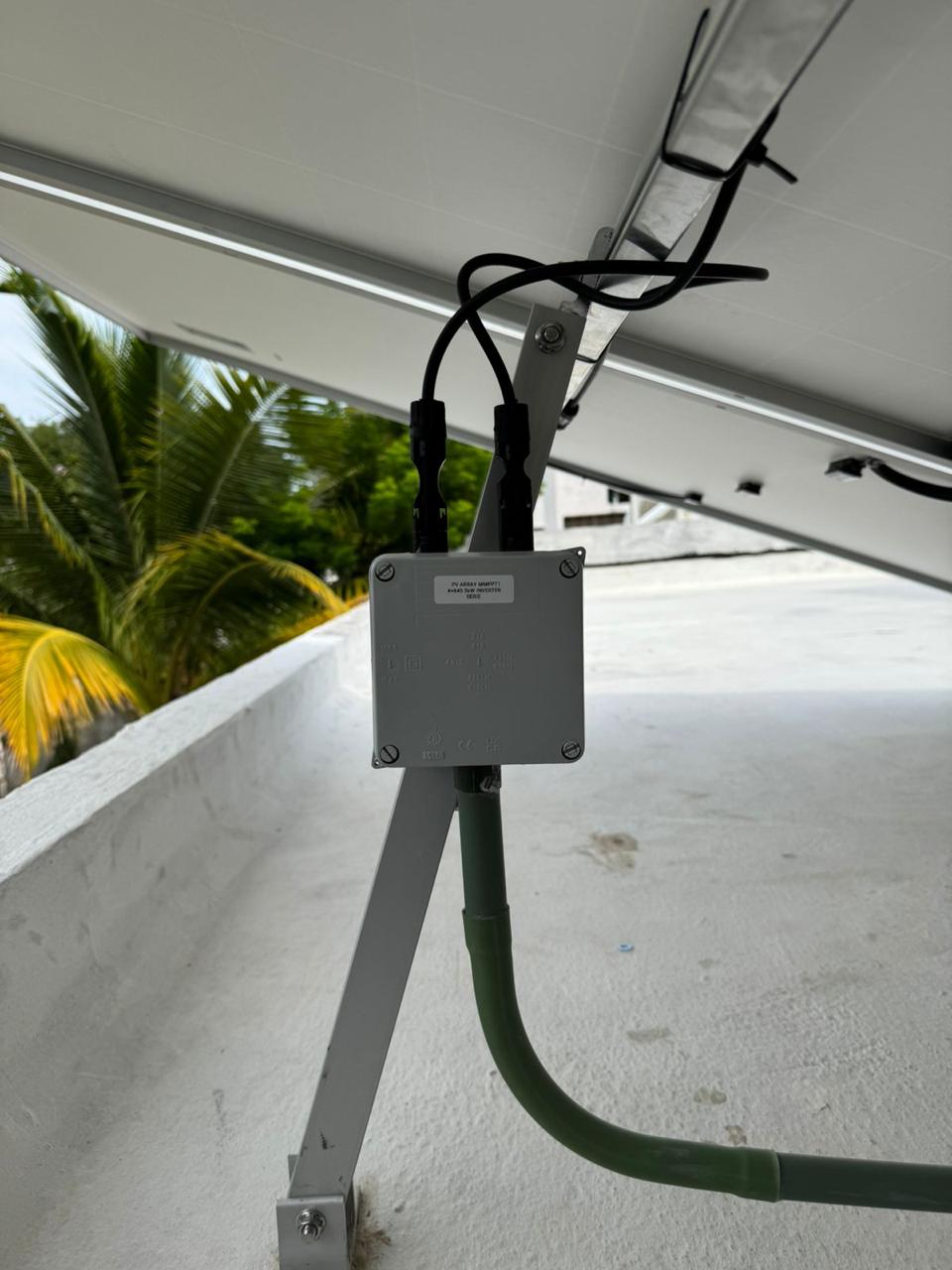
What UNESOL builds
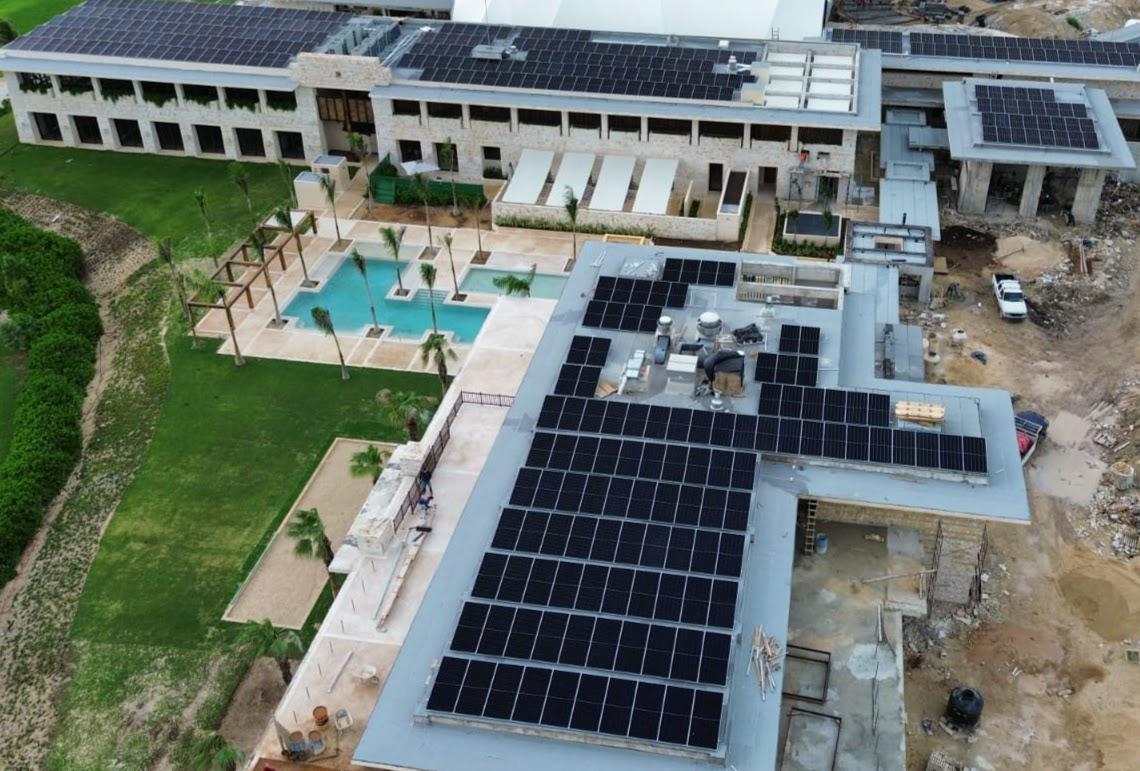
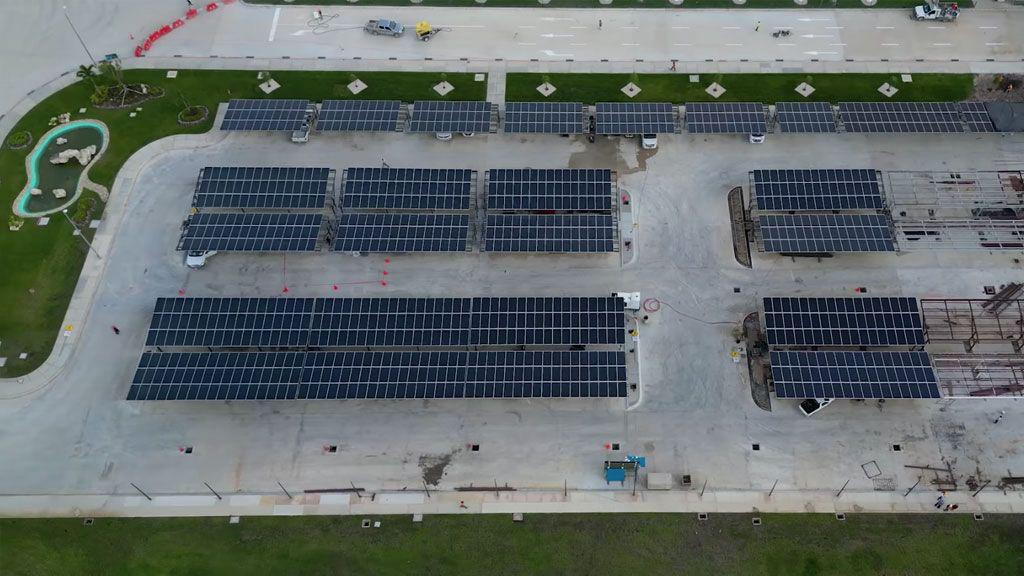
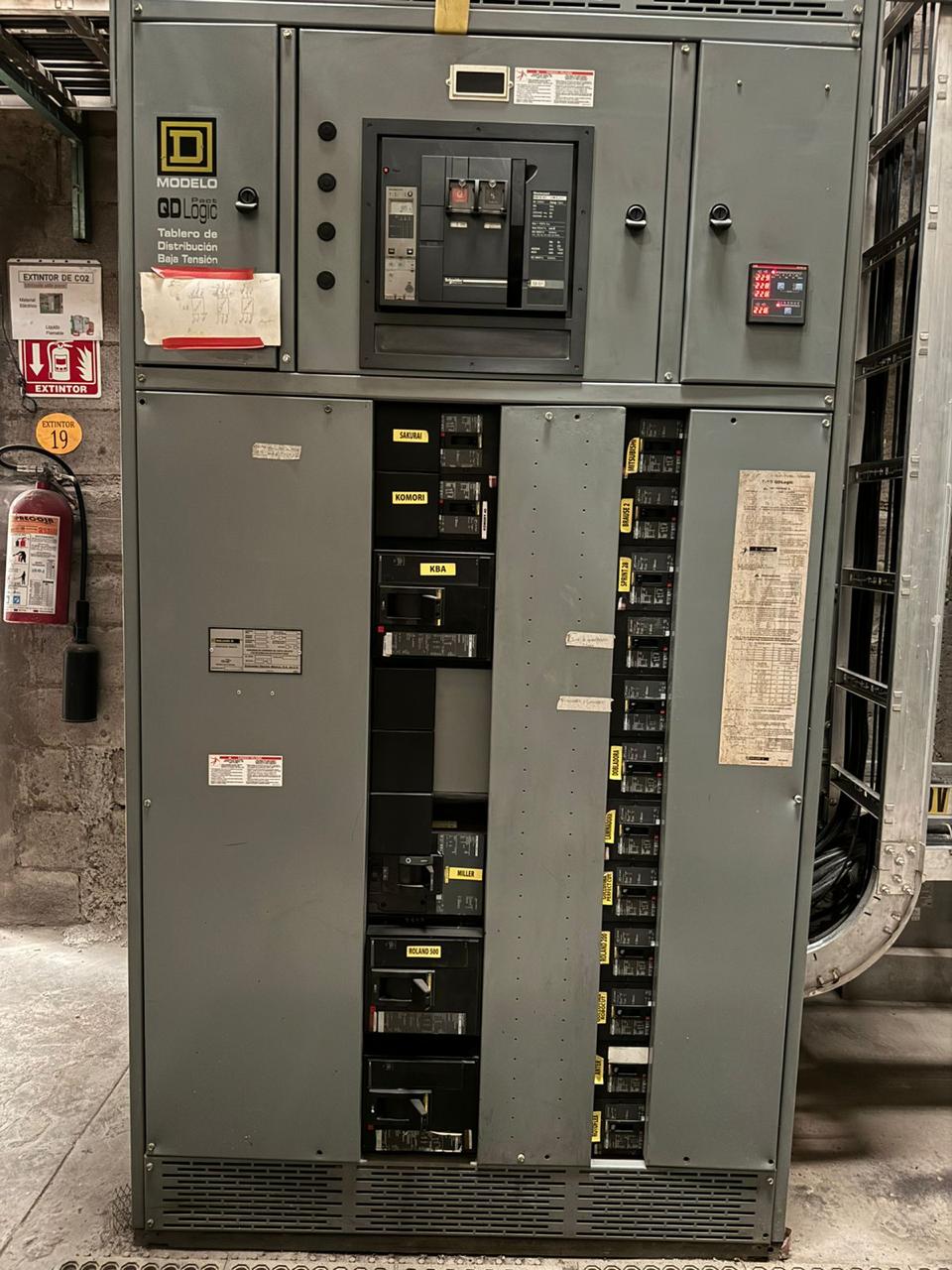
The scope runs from a single villa rooftop to the electrical infrastructure of a full development. • Grid-connected photovoltaic systems • Hybrid and off-grid solar • Lithium battery storage and backup power • Roof-mounted, elevated-rack, ground-mounted and carport arrays • String inverter and microinverter architectures • Low and medium voltage electrical projects • Modernisation of existing electrical infrastructure • EV charging installations • Technical studies, site surveys and engineering calculations Equipment is chosen per project rather than by supplier loyalty, drawing on modules from LONGi, JA Solar and ZNShine, inverters from Growatt, Huawei, SMA, Solis, LuxPower, Sol-Ark and Deye, microinverters from Hoymiles, Enphase and APsystems, storage from Victron and Pylontech, and mounting and protection components from K2 Systems, Stäubli, Phoenix Contact, Mersen and DEHN.
Who it is for, and how a project runs
Private homes and villas, condominiums and residential developments, hotels and hospitality, restaurants, offices and commercial buildings, and undeveloped lots with no utility connection. Diagnosis, engineering, economic evaluation, design, supply, installation, commissioning, follow-up. Before anything is recommended, the assessment covers energy consumption, electrical demand, site conditions, available space, existing infrastructure, and any expansion you expect to make later. A system sized for the building you are about to extend is a different system from the one you have today.
Enquire about solar for your property
Frequently Asked Questions
Yes, and it is common on lots without a utility connection. It requires generation and storage sized together against your real daily consumption, with air conditioning being the load that usually drives the design. A generator can be integrated as a third source for extended low-sun periods.
That is a normal starting point in this region rather than an obstacle. A site survey establishes what the property will consume, and the system is designed around that from the beginning.
Yes. Grid-connected systems are the most common configuration for properties with an existing supply. Adding batteries to a grid-connected system also keeps essential circuits running during interruptions.
Modern lithium systems are specified in charge cycles rather than years, so lifespan depends on how hard the system is worked. You will get an expected figure for your specific configuration as part of the proposal.
Mounting structure and fixing method are specified for coastal wind loads, and this is one of the areas where installation quality matters more than equipment brand. Ask for the mounting specification in writing as part of any quote, from any installer.
Flat concrete roofs, tile and metal have all been installed on. Where a roof is unsuitable or the terrace needs to stay clear, ground-mounted and elevated-rack arrays are alternatives.
It depends on system size and whether electrical infrastructure needs upgrading first. This is established during the diagnosis stage, before you commit.
Yes. Panels, protection, feeders, grounding and upgrades to existing infrastructure are part of the same scope, which matters when an older property cannot support the load you want to add.
Still have questions?
Tell us about your property and our team will arrange a technical assessment.