Cancún's Kukulcán interchange passes the halfway mark and could open before December
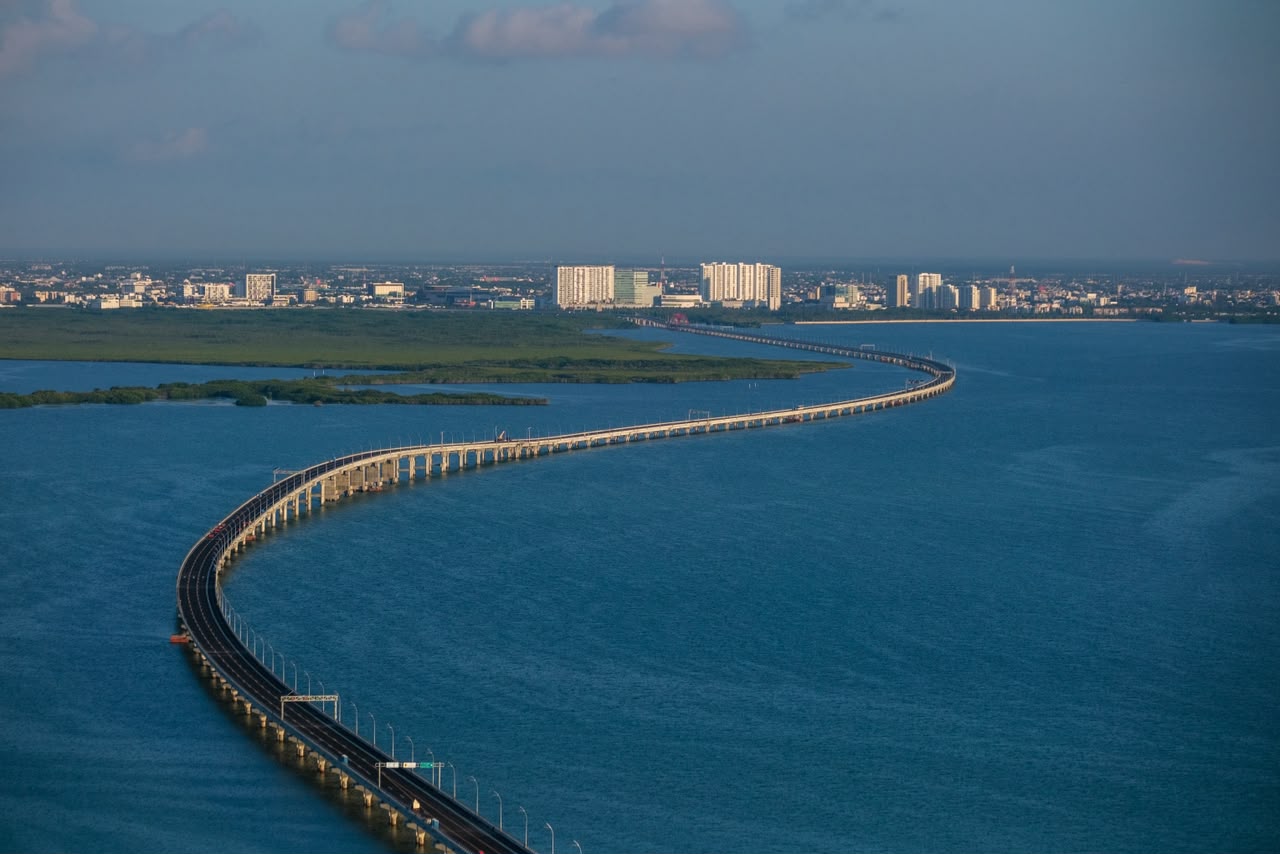


The federal interchange that joins Cancún's new Nichupté bridge to the hotel zone is 57 percent built, the secretary of infrastructure said on September 17. December is the official date. He thinks it will come sooner.
Cancún's Kukulcán interchange, the federal works joining the new Nichupté bridge to the hotel zone, is 57 percent built, Mexico's secretary of infrastructure told the President's morning press conference on September 17. It is the number that decides whether the bridge's promised ten minute crossing survives its landing on the other side of the lagoon.
Jesús Antonio Esteva Medina, head of the Secretaría de Infraestructura, Comunicaciones y Transportes (SICT), reached the project partway through a long list of federal road works and gave it three sentences. "Lo iniciamos en abril de este año, estaremos terminándolo en diciembre de este año. Y lleva 57 por ciento de avance, va muy rápido, yo creo que va a terminar un poco antes." Started in April, due in December, more than half built, and in his view likely to finish early. The project is federal money from end to end: 484 million pesos, according to SICT, with crews now working on foundations, the elevated structure and the embankments that carry the approaches.
What is being built
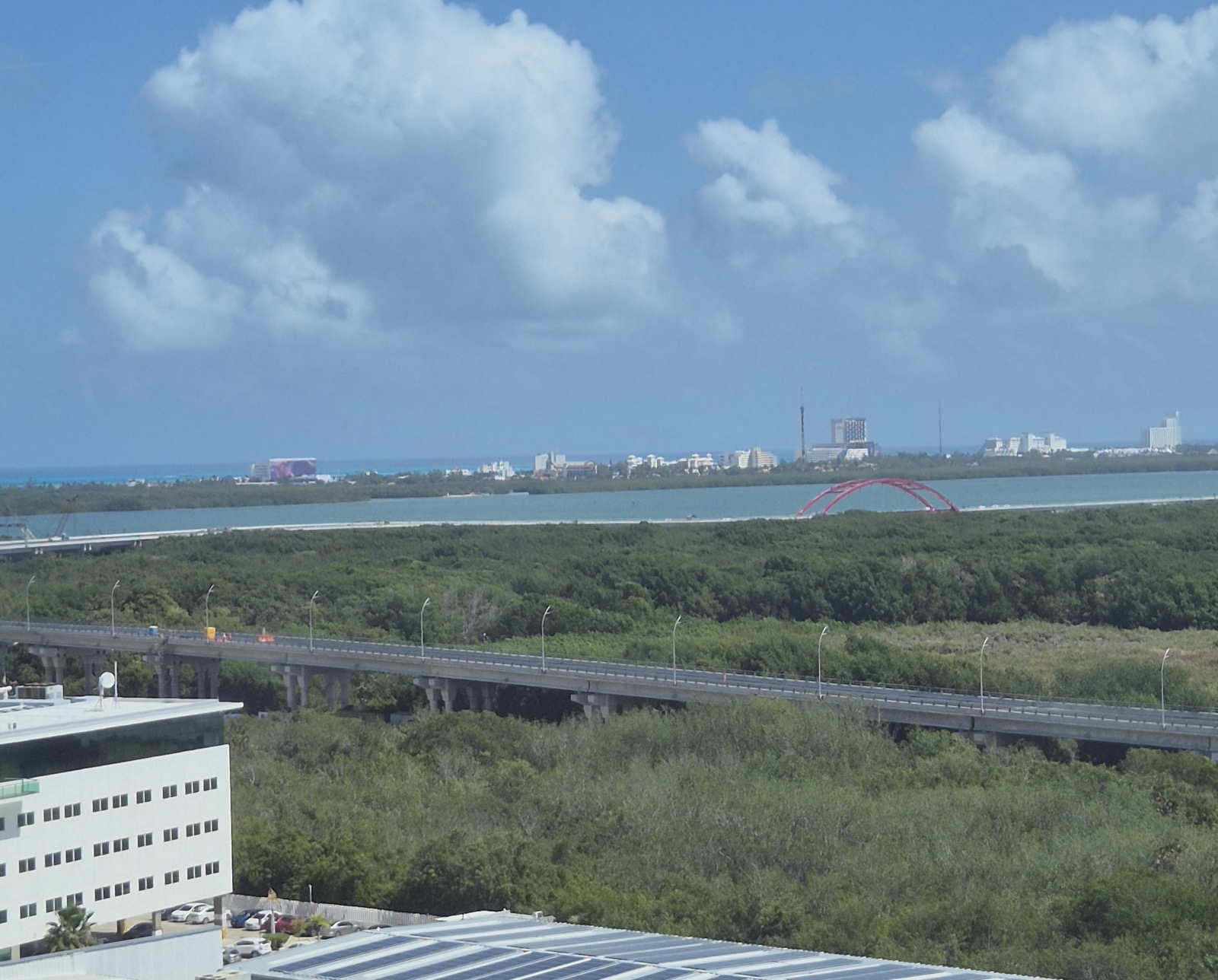
The Distribuidor Vial Kukulcán sits at the hotel zone end of the Nichupté bridge, where the bridge comes down onto Bulevar Kukulcán, the hotel zone's main avenue. When SICT announced the start of works on May 2, it described the job as linking the bridge directly with the Zona Hotelera. Press reports of its environmental authorization placed it at about kilometer 13.5 of the boulevard, and since April traffic heading toward kilometer zero has been sent around the site on Avenida Marlín, behind Plaza Kukulcán.
Two lengths have circulated for it, 770 meters in May and 1.92 kilometers since July, and both come from SICT. They measure different things. The ministry's July communiqué puts the whole work at 1.92 kilometers; the elevated overpass at its heart is about 770 meters, the figure SICT gave when construction began. The state government describes the design as an overpass in two separate carriageways, one with two lanes in one direction and one with a single lane in the other, with side streets underneath for local traffic, bus stops and pedestrian crossings. Pipes for drinking water and drainage are being laid beneath it as part of the same job.

Why the bridge needs it
The Nichupté bridge opened on May 2, 2026. SICT gives it an overall length of 11.2 kilometers, 8.8 of them on the main trunk across the lagoon, and says it connects the residential city with the hotel zone in ten minutes, a trip between the city, the airport and the hotel zone that had taken up to an hour. SICT puts the total investment in it at 10,319 million pesos.
A bridge, though, only moves traffic as fast as its ends can take it. Every car that crosses the lagoon has to join Bulevar Kukulcán, the road that already carries the hotel zone's own traffic. The interchange is SICT's answer to that meeting point. It is designed as a paso superior, an overpass, to connect the bridge directly with the hotel zone and to ease the flow toward the airport, with the side streets beneath left for local traffic. SICT's own framing puts the beneficiaries at 1.32 million residents and some 10 million visitors a year.
The boulevard itself is changing at the same time, under a separate state program. Infratur, Quintana Roo's tourism infrastructure institute, is installing speed reducers at five points along Kukulcán, among them Playa Delfines, Playa Tortugas, Plaza La Isla and the Convention Center, together with accessibility ramps and pedestrian crossings lit from the ground to warn drivers when someone is about to step out. Its head, Ricardo Archundia Sánchez, made the case for reducers over more traffic lights in plain terms: a light stops the traffic completely for several minutes, a reducer only slows it. On a road about to take the bridge's traffic as well as its own, that choice matters.
What this does and does not prove
The honest part is the date. In May, SICT said the interchange would be ready in October. Its July communiqué said the end of October. The environmental authorization reported in June assumed the same month. On September 17 the official date was December, so "before December" is early against today's calendar and late against the one given in the summer. What has changed for the better is the pace. The work stood at 33 percent in SICT's July 28 communiqué and at about 30 percent when the governor inspected it in mid July; it has gained roughly 24 points in seven weeks.
In the meantime the works are felt every day. Drivers told Por Esto in September that the stretch around the site can take up to an hour to cover a single kilometer, which is exactly the delay the bridge was built to remove.
Nor does a faster road to the hotel zone answer the question Cancún's tourism economy is asking this autumn. ASUR's monthly figures, as reported by Diario de Yucatán, show international passengers through Cancún airport down 15 percent in August on a year earlier. That is a matter of routes and seats, not overpasses. What the interchange can do is make the last leg of every arrival quicker once the winter schedule builds.
For people who live, own or rent on the hotel zone side, the practical question is simpler than any percentage: whether the drive from the bridge onto Kukulcán runs clear by the time the season is at full strength. SICT's answer is December at the latest, and its secretary is betting on sooner.
For more on the city, see our guide to Cancún, with news and homes for sale across the area.
Sources: Presidencia de la República, stenographic version of the President's press conference of September 17, 2026 (remarks by Jesús Antonio Esteva Medina). SICT, Comunicado 088-2026, inauguration of the Nichupté bridge, May 2, 2026. SICT, Comunicado 144-2026, "Distribuidor vial Kukulcán impulsará el turismo en Cancún", July 28, 2026. Gobierno de Quintana Roo, Coordinación General de Comunicación, July 12, 2026. Heraldo de México Quintana Roo, May 14 and July 7, 2026. Quintana Roo Hoy, April 21, 2026. Por Esto, Noticaribe and 24 Horas Quintana Roo, September 17, 2026. Diario de Yucatán, September 15, 2026. 24 Horas Quintana Roo and Reportur, September 7, 2026, on the Infratur works.
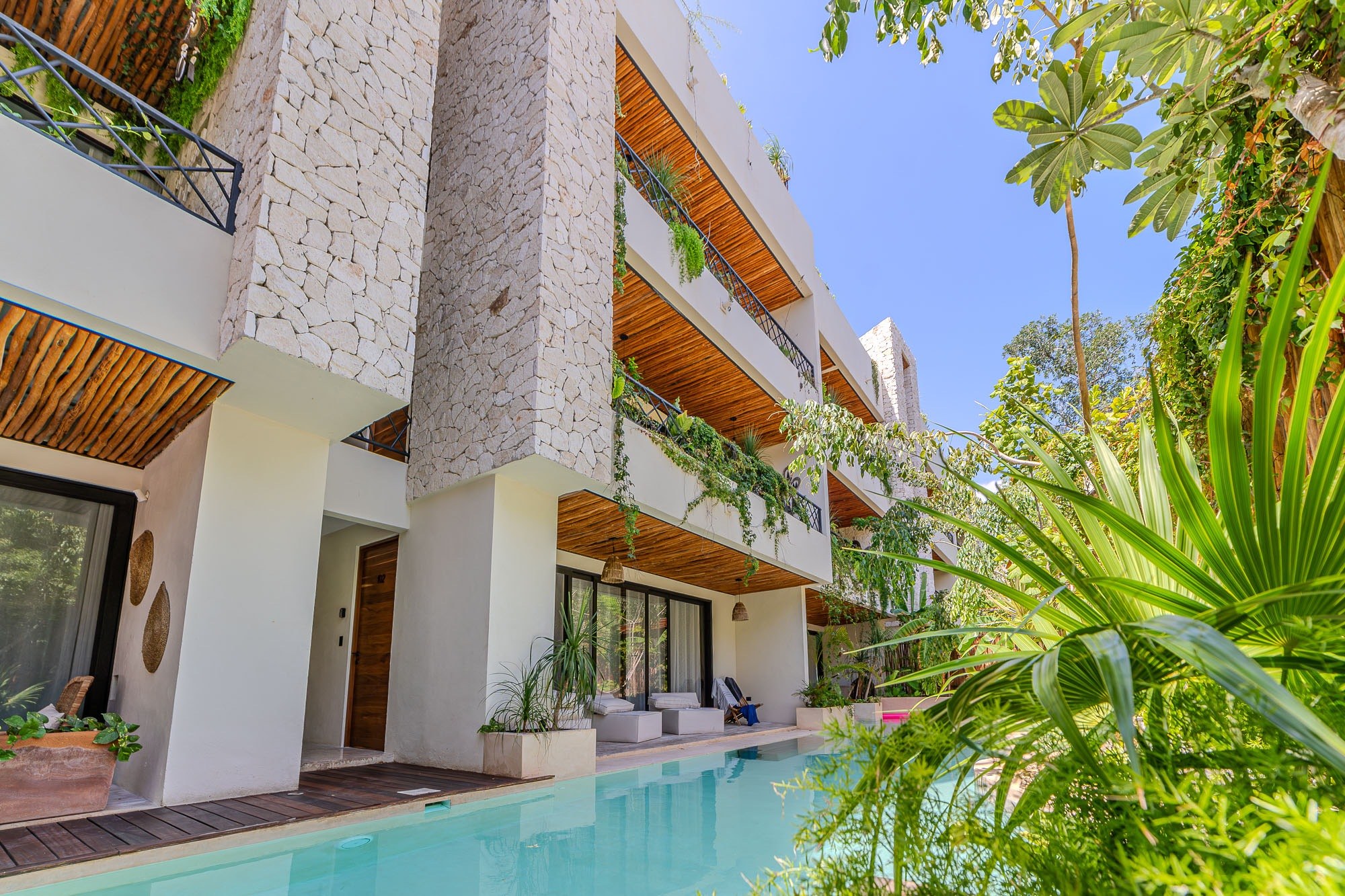
Itza II | 2 Bedroom Furnished Apartment with Private Jacuzzi in Aldea Zama, Tulum

Maison Siscolino | 4 Bedroom Villa with Swim Up Pool and Rooftop Plunge Pool in Region 15, Tulum
Maison Siscolino, Region 15 Tulum. Furnished four bedroom villa, 245 m² on a 301 m² lot with swim up pool and rooftop plunge pool.
We are the ultimate guide to invest in Tulum
Ultimate Guide to a profitable investment property in Tulum. Find homes for sale, condos or land and consult with an experienced real estate advisor.
News: Real Estate, Lifestyle and Growth Across the Riviera Maya
The latest from Tulum, the Riviera Maya and the Mexican Caribbean, from market trends and investment opportunities to lifestyle and the infrastructure shaping the coast.