How to check a Tulum real estate agent before you trust them


Ask any Tulum agent six things before you pay anything: who they represent, where your deposit goes, who checks the title, whether you can choose your own lawyer, what permits the developer holds, and what they have sold here. The answers, in writing, tell you more than any badge.
Registers and memberships exist, and we cover them below, but none of them checks the property you are buying or the contract you are about to sign. These questions do. Below each one is what a good answer sounds like, and what a weak one sounds like, so you can tell the difference in the room.
What to ask an agent, and what a good answer sounds like
- "Who do you represent in this deal, and who pays your commission?" A straight answer names the seller, the buyer or both, and the amount.
A good answer: "The developer pays us X percent on completion; we are their agent, and you should have your own lawyer." Or: "We represent you, our fee is X, and here is the agreement." Either is fine, because both tell you whose side the agent is on. A weak answer: "Don't worry about that, it doesn't cost you anything." Somebody pays, and it shapes the advice you get. - "Where does my deposit go, under what document, and how do I get it back if the deal fails?" You should see a written agreement that names who holds the money and the conditions for returning it before you send anything.
A good answer names an account holder (the developer's company, a bank trust, a notary), the document that governs it, and the refund conditions, and it arrives before the payment request, not after. A weak answer is a bank account number by message with the words "to secure the unit". A request to send money to a personal account is the point to stop. - "Who will check the title?" The answer should be your own legal representative and the notario, a government-appointed notary who acts as the legal authority on the transaction, not a US-style notary. Be wary of an agent who offers to handle that check themselves.
A good answer: "Your lawyer and the notario. We can suggest a notario, and you confirm the appointment." A weak answer: "We've already checked it, it's clean." An agent can have looked; an agent cannot be the party whose job it is to verify title, liens and tax status, and the notario carries legal responsibility for that. - "Can I choose my own lawyer?" The answer is yes.
A good answer is the word yes, without conditions. A weak answer is any version of "you don't need one here" or "our lawyer handles both sides", which saves you a fee and costs you the one person in the deal who works only for you. - For pre-construction: "What permits does the developer hold, and can I see them?" Ask for the documents, not a summary. Our page on pre-construction payment plans covers what to check on the developer.
A good answer is a set of documents with numbers and dates: land use, the state urban congruence certificate, the municipal building licence, and the deed reference for the land, which your notario then reads at the registry. A weak answer is "everything is in order" or "the permits are being processed". A permit in process is not a permit. - "What have you sold here, and can I speak to a past buyer?" An agent who has closed deals in the area can point to them.
A good answer names developments and streets, and offers an introduction to a buyer who has completed. A weak answer is a count with no names, or a list of listings rather than closings. Selling and having sold are different things.
Signs to slow down: pressure to pay a deposit before you have seen a contract, a request to send money to a personal account, a property that cannot be visited, and permits that are "on the way".

Checklist: what to have in writing before you pay
None of this needs a lawyer to draft. It needs the agent to write it down.
- Whom the agent represents, and who pays the commission.
- Who will hold your deposit, under what document, and the conditions and timing of a refund.
- Confirmation that you may appoint your own lawyer and that the notario verifies title.
- For pre-construction: the permit documents themselves, with numbers, and the deed reference for the land.
- The names of completed sales the agent points to, and a past buyer willing to talk.
- The price, the currency, and what is included. Our page on closing costs in Tulum says what comes on top, and our page on how long buying in Tulum takes says how the money and the paperwork are sequenced.
Red flags we have seen described
This is general information from the buying-process notes we keep for our own team, compiled from 2026 press reporting on fraud in Tulum and not reviewed by counsel. Reported figures put formal real estate fraud complaints in the municipality at over 200 across two years, and the state flagged 29 developments for advertising and taking deposits without the required certificate or licences. The signs that recur in that reporting are worth knowing, whoever the agent is:
- A title deed or power of attorney with no registry folio number in the public property registry.
- Parcel identifiers that differ between one document and the next.
- Missing notary seals, or a seal that does not match the official notary directory.
- A seller who resists independent verification by a notario, which the reporting treats as the strongest single signal.
- Ejido land presented as privately titled. Ejido is communal land, its conversion is a specific legal process, and it is the classic trap for a foreign buyer here.
- A developer selling before its permits exist.
An agent's job on seeing any of these is to stop and route the question to a lawyer and the notario, not to reassure you that a document is genuine. If an agent does the reassuring instead, that is the answer to question three.
What registers and memberships tell you
SEDETUS. In Quintana Roo, where Tulum sits, the state department for urban and territorial development (Secretaría de Desarrollo Territorial Urbano Sustentable) issues real estate advisers a registration number called a matrícula and keeps a public list of them, the padrón. Its advisers section also publishes the state's law on real estate services, a code of ethics and a complaints form. A listing on the padrón tells you the state knows who that adviser is.
How to use the SEDETUS site. As read on October 27, 2026, the advisers section is a Spanish-language microsite with a menu down the side. "Normatividad" holds the state's Ley de Prestación de Servicios Inmobiliarios, the Reglamento Inmobiliario, the fee law, a Código de Ética and a Formato de Quejas, the complaints form. "Matrículas" has three pages, for a first registration, a renewal and a replacement. "Padrón" is the public list, and it links out to a separate lookup at asesores.sedetus.gob.mx, where you search for an adviser by name. "Consejo Inmobiliario" holds the minutes of the state real estate council, and the news column that day carried items on batches of matrículas being issued. There is no English version, so take the adviser's name and matrícula number as they give it to you and search the padrón for both.
AMPI. The Asociación Mexicana de Profesionales Inmobiliarios is a national trade association founded in 1956 that trains and certifies its members. Membership is a professional affiliation, not a state registration.
Neither one tells you whether a particular property is sound, whether its title is clean or whether a developer holds its permits. That is the work of the six questions above, your own legal representative and the notario.

What buyers ask
Does a matrícula number mean the agent is trustworthy? It means the state has registered that adviser and lists them on the padrón. It says nothing about the property or the contract in front of you. Ask the six questions anyway.
Can the agent hold my deposit? Ask under what document and on what refund terms, in writing, before you send anything. A personal account is the point to stop. Our page on pre-construction payment plans covers who holds the money through a build.
Do I really need my own lawyer if the notario checks the title? The notario verifies the transaction for the state; your lawyer works for you. Our page on the legal steps for a foreign buyer in Tulum sets out who does what.
What does the broker check before listing a property? For us, the developer's background and a visit, then the listing data. Not the title. Our page on what we check before a property goes on our site says exactly that, and what it leaves to your lawyer.
Our own record
Tulum Land and Property has worked the Riviera Maya since 2021, with a decade of experience behind it. We are a team of seven and have completed more than 100 property transactions. Ask us any of the six questions above. We would rather you did.
This page is general information, not legal advice. Rules on real estate advisers are set by the state and can change. Confirm anything that matters to your purchase with your own legal representative and the notario.
Sources: SEDETUS, real estate advisers section, sedetus.qroo.gob.mx/asesores (read October 26 and 27, 2026); AMPI, ampi.org (read October 26, 2026); red flags and fraud figures from Tulum Land and Property's internal buying-process notes, drawing on TulumTimes and The Yucatan Times fraud reporting, 2025 to 2026, and EV Tulum on the 29 flagged developments, not reviewed by counsel; Tulum Land and Property's own figures, confirmed by Michael Gill, September 30 and October 11, 2026. Top photo: Blogtrepreneur, CC BY 2.0. Writing photo: rawpixel.com, CC0, via Wikimedia Commons.
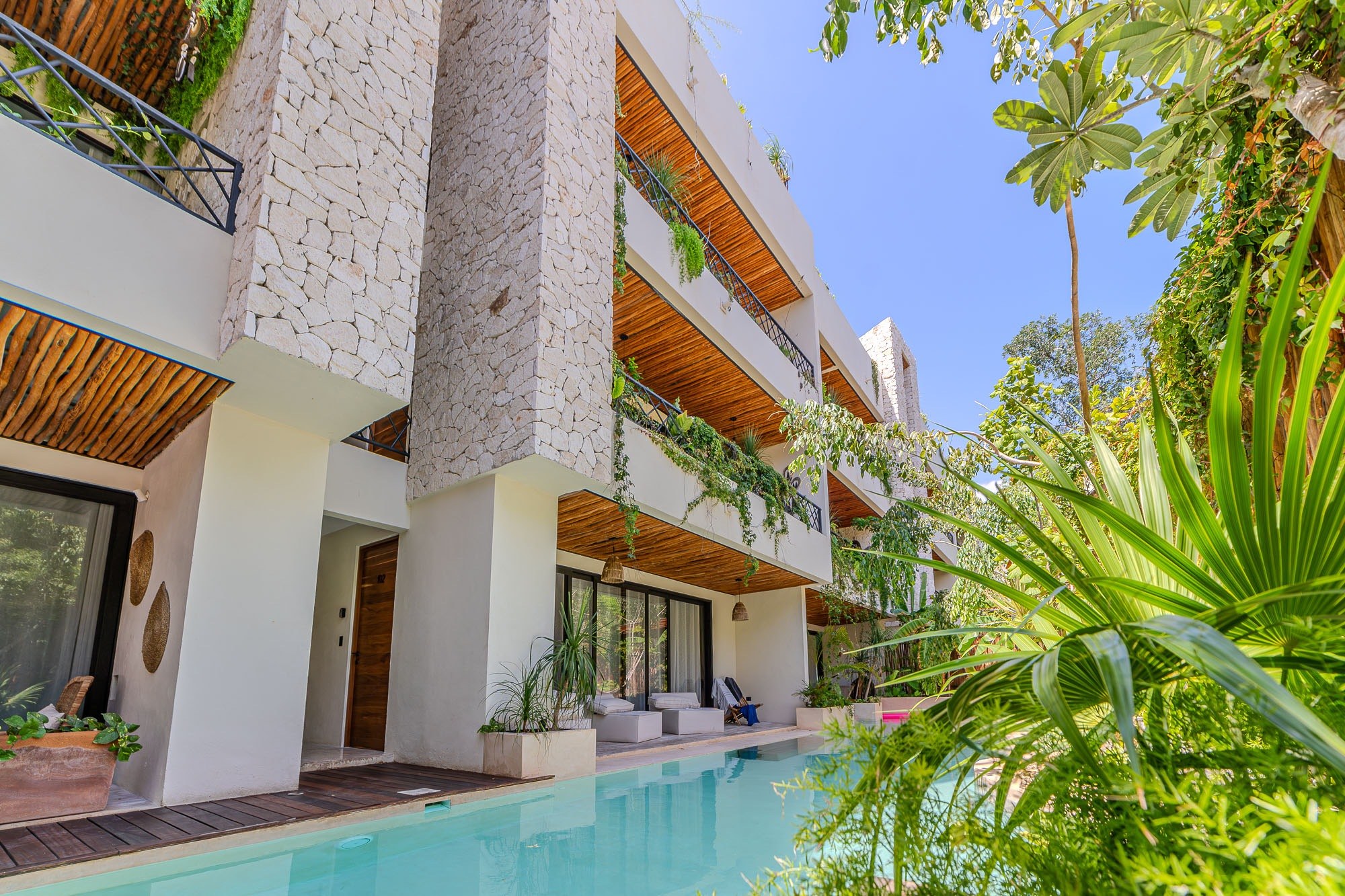
Itza II | 2 Bedroom Furnished Apartment with Private Jacuzzi in Aldea Zama, Tulum
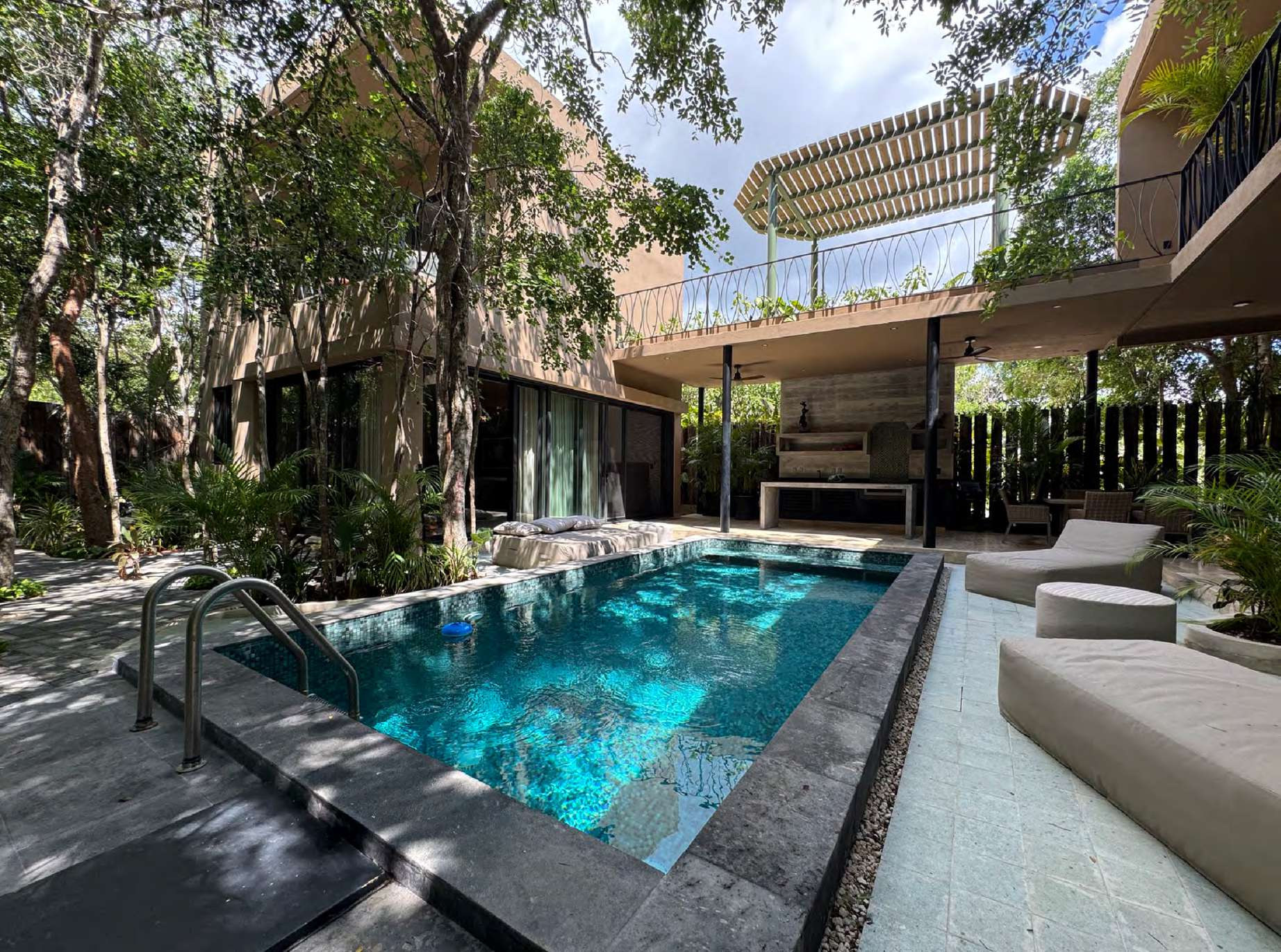
House Yaxche | 4 Bedroom Canopy Compound in Region 15, Tulum
Fully furnished 4 bed compound in gated Casa Verde, Region 15, Tulum. Main house plus two independent studios, heated pool, solar. $1,050,000 USD.
Follow our Tulum market reporting in Google.
Add to preferred sourcesWe are the ultimate guide to invest in Tulum
The complete guide to buying property in Tulum. Find homes for sale, condos or land and consult with an experienced real estate advisor.
News: Real Estate, Lifestyle and Growth Across the Riviera Maya
The latest from Tulum, the Riviera Maya and the Mexican Caribbean, from market trends and investment opportunities to lifestyle and the infrastructure shaping the coast.