
Tulum vs Mérida: which should you buy in?
Tulum is a beach town of about seventy five thousand people that the world discovered in a decade. Mérida is a colonial capital of just over a million that has been a city for nearly five hundred years. Buyers who ask us to compare them are usually choosing between a place to spend the winter and a place to live all year, and the honest answer depends on which of those you mean.
.webp)


.webp)


.webp)





At a glance
| Tulum | Mérida | |
|---|---|---|
| What it is | A Caribbean beach town that grew fast around its ruins, its beach and its name, still filling in | The capital of Yucatán state, a colonial city founded in 1542 with a modern north of new avenues, malls and hospitals |
| Population, INEGI, Encuesta Intercensal 2025 | 75,327 in the municipality, up 61.2% since 2020 | 1,053,914 in the municipality, 1,518,803 in the metro area of 13 municipalities |
| The sea | On it: the Caribbean, reached through the beach clubs and the public access points | Inland: the nearest beach is Progreso, about 35 km north on the Gulf of Mexico |
| Own airport | Tulum International, opened December 2023. 1.24 million passengers in 2025, down by about a third in the first half of 2026. Nonstop flights from several US cities, including Atlanta, Dallas, Houston and Miami, as of October 2026, and seasonal routes from Canada | Mérida International, under 5 km from the center. 3.94 million passengers in 2025. Houston and Miami all year, Dallas in season, Orlando on Viva from October to March, Toronto and Calgary in winter |
| Cancún airport | 131 km, about 1 hour 45 minutes by road | About three and a half hours by road |
| To the other one | About three and a half hours by road through Valladolid. By Tren Maya, one through train a day each way between Mérida Teya and Tulum Airport station, via Cancún, about 5 hours 40 minutes to 5 hours 50 minutes | The same trip in reverse |
| Clock | Southeast time, one hour ahead of Mérida | Central time |
| Climate | Coastal and humid, with a sea breeze | Inland and hotter: average daily highs of about 36°C (97°F) in May, a little lower in April |
| Hospitals, international schools | One private hospital, Costamed, open since 2015. Three bilingual schools including Colegio Alemán at Tulum Country Club. Most established international schools are still in Playa del Carmen | Several private hospitals, including Star Médica in Altabrisa and Christus Muguerza Faro del Mayab in Temozón Norte. Many bilingual schools, including Madison International School, an IB World School |
| US consulate | Served from Mérida | The US Consulate General for Yucatán, Quintana Roo and Campeche, in Vía Montejo since May 2025 |
| US State Department advisory | Quintana Roo: Level 2, exercise increased caution | Yucatán: Level 1, exercise normal precautions |
| Foreign ownership | Inside the coastal restricted zone: a bank trust, the fideicomiso | Also inside it, about 35 km from the coast: the same bank trust |
| Short term rentals, AirDNA, twelve months to August 2026 | Tulum: 46% occupancy, $125 USD average daily rate, 4,026 active listings | Mérida: 59% occupancy, $67 USD average daily rate, 4,789 active listings |
Where the figures come from. Population is from INEGI, Encuesta Intercensal 2025, published on September 22, 2026. Airport traffic is each airport's published total for 2025. The rental figures are AirDNA's, for the twelve months to August 2026 as updated on September 29, 2026, and they describe each market as a whole rather than any one property. None of them is our figure. This page does not set asking prices side by side: the two markets sell different things, and a median across a beach villa and a colonial townhouse would tell you nothing useful.
A town you visit and a city you live in
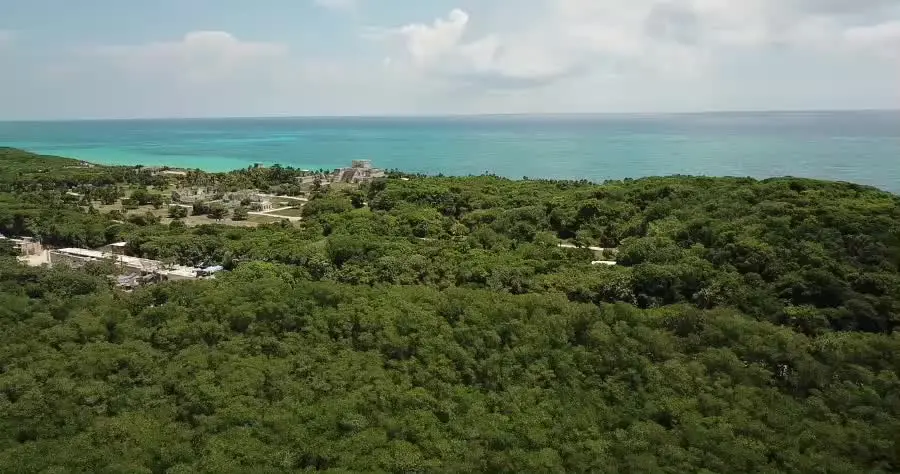
Most comparisons on this site set one stretch of coast against another. This one does not. Tulum is a destination: the beach, the ruins, the jungle, the restaurants, and a year shaped by the winter season. Mérida is a working state capital, with universities, hospitals, malls, a US consulate and an airport five kilometers from the center, and a year shaped by the heat.
That is why the buyers differ. The Tulum buyer is usually buying a second home, a rental, or both. The Mérida buyer is more often moving: retirees who want a city that works, and families who want its schools and its hospitals. If you will spend four months a year somewhere, Tulum makes the stronger case. If you will spend twelve, Mérida usually does.
Getting there, and getting between them
Mérida's airport is the busier of the two by a wide margin, 3.94 million passengers in 2025 against Tulum's 1.24 million, and it sits inside the city. It flies nonstop to Houston on United and Miami on American and Viva all year, to Dallas on American in season, to Orlando on Viva from October to March, and through the winter to Toronto on Air Canada and WestJet and to Calgary on WestJet. This season Air Canada's Toronto flights run from November 21, 2026 to April 17, 2027, and WestJet's Calgary flights from December 17, 2026 to April 1, 2027.
Tulum's airport, open since December 2023, has nonstop flights from several US cities, including Atlanta, Dallas, Houston and Miami, as of October 2026, and seasonal routes from Canada (our piece on the winter schedule). Its passenger numbers fell by about a third in the first half of 2026, on AFAC's figures, and Aeroméxico and Volaris are pulling back from Tulum. Many visitors to Tulum still land at Cancún, about an hour and three quarters up the 307.
Between the two, the road is the practical choice: about three and a half hours, through Valladolid on the toll highway. The Tren Maya links them too, but not directly. The operator's timetable shows one through train a day in each direction between Mérida's Teya station and Tulum Airport station, running by way of Cancún, and it takes about 5 hours 40 minutes to 5 hours 50 minutes. It is a good way to see the peninsula and a slow way to cross it. The same line begins carrying freight in January 2027, which matters more to the cost of building on this coast than to passengers (our report on the Maya Train's freight era).
One small thing that catches people out: Quintana Roo keeps Southeast time and Yucatán keeps Central time, so Mérida is an hour behind Tulum all year.
Owning it: the same trust in both
Mexico's constitution does not let a foreigner hold direct title within 50 km of the coast. Tulum is inside that band, and so is Mérida, which sits about 35 km from the Gulf. In both places a foreign buyer uses a fideicomiso, a bank trust that gives foreign buyers full ownership rights: you can live in the home, rent it, renovate it, sell it and leave it to your family, and the trust runs for fifty years and renews.
What differs is the local paperwork. The acquisition tax and the other closing costs are set under state and municipal rules, so the same price does not carry the same costs in the two places. The notario, a government appointed notary who acts as the legal authority on the transaction and not a US style notary, gives you the exact figure for your purchase before you sign.
The full process is in our guide to how to buy real estate in Tulum. It applies in Mérida with that one difference.
Daily life: hospitals, schools and services
This is where Mérida's case is strongest. The north of the city holds most of what a full time resident needs within a short drive: Star Médica in Altabrisa, with a round the clock emergency department, Christus Muguerza's Faro del Mayab hospital in Temozón Norte, and a long list of bilingual schools, including Madison International School, an IB World School from nursery through high school. The US Consulate General moved into a purpose built campus in Vía Montejo in May 2025, and its district covers Quintana Roo as well as Yucatán, so it is the consulate that serves Tulum too.
Tulum is catching up. It has one private hospital, Costamed, open since 2015, and three bilingual schools including Colegio Alemán at Tulum Country Club, with most established international schools still in Playa del Carmen, forty five minutes north. Inside the planned communities roads are paved and utilities connected; outside them services are uneven, and many streets are unpaved and on private wells. The town is investing in the basics, including a 542.8 million peso water project to secure supply for the decade ahead (our report).
Safety
Safety comes up in almost every conversation about Mexico, and here the comparison is one a buyer can check in a minute. The US State Department's travel advisory, last reissued on May 29, 2026, rates Yucatán at Level 1, exercise normal precautions; Yucatán and Campeche are the only two Mexican states at that level. Quintana Roo, which includes Tulum, is at Level 2, exercise increased caution.
INEGI's quarterly urban safety survey points the same way for Mérida. In June 2026, 38.2 percent of adults in Mérida said they felt unsafe living in their city, against 59.8 percent across the country, which placed Mérida among the fifteen cities in Mexico with the lowest reading.
Neither place is where most of the risk to a buyer sits. On either side of the peninsula, the thing more likely to cost you money is buying badly: an unclear title, an unlicensed project, a contract nobody checked. That is the part we can help you avoid.
The heat, the sea and the storms
Mérida is hot. It is inland, it has no sea breeze, and the average daily high is about 36°C (97°F) in May, a little lower in April, on the national weather service's 1991 to 2020 normals. Buyers who have only visited in January should visit again in May before they decide. Tulum is coastal, humid and cooled by the breeze off the Caribbean.
Neither is out of hurricane country. Beryl came ashore near Tulum in July 2024 as a Category 1. Isidore made landfall on the Yucatán coast in September 2002 as a major hurricane and sat over the state for about a day and a half, and it is the storm Mérida still measures others by. Being inland spares Mérida the storm surge; it does not spare it the wind and the rain.
Then the sea. Tulum's beach is the reason for Tulum, most of it reached through the beach clubs, with ten free public access points now set out under the federal Plan Tulum Renace. It also gets sargassum: 2026 has been a record season, with 18,330 metric tons collected in Tulum municipality by late September, on the state environment secretariat's figures. Mérida has no beach of its own. Its coast is Progreso, about 35 km north on the Gulf of Mexico, and beyond it a quiet shoreline that runs east toward the flamingo colonies at Ría Lagartos (our report on this season's count). A Mérida owner goes to the beach. A Tulum owner lives near it.
Renting it out
The two rental markets work differently. AirDNA's figures for the twelve months to August 2026 put Mérida at 59 percent occupancy on an average daily rate of $67 USD across 4,789 active listings, and Tulum at 46 percent on $125 USD across 4,026. Mérida books more of its nights at about half the price; Tulum charges almost twice as much a night and sits empty for more of the year.
Those are AirDNA's figures rather than ours, and they describe each market as a whole, not any individual property. The rules and taxes on short stays are set by each state, so check them with an accountant on the side you buy before you plan around either.
Who Tulum suits
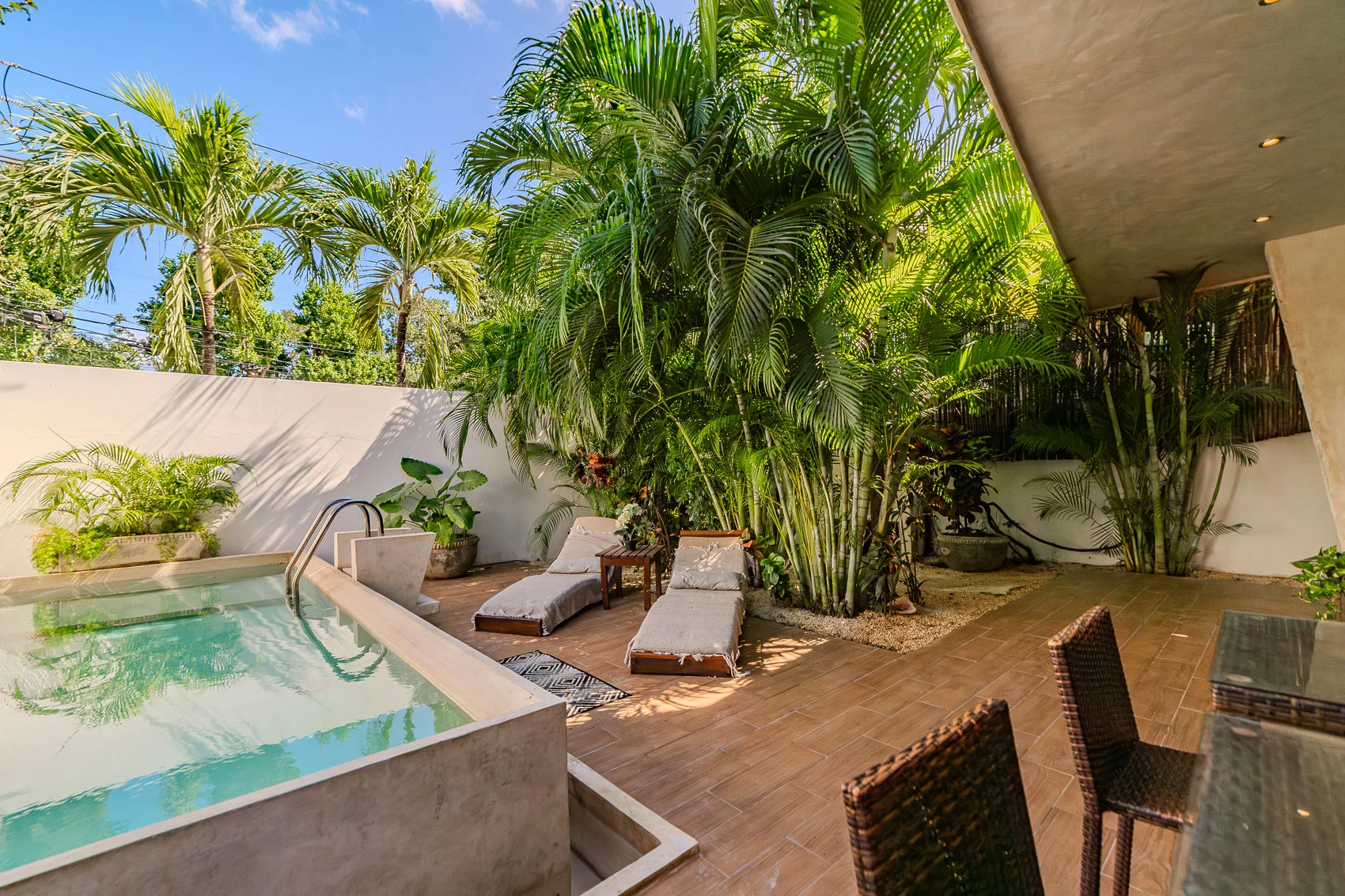
Buyers who want the Caribbean on the doorstep. Buyers who will spend the winter and let the home for the rest of the year. Buyers who want a house with a pool on a jungle lot, a beach town's restaurants and a scene with other foreigners in it, and who can live with services that are still being built.
Who Mérida suits
Retirees moving full time who want hospitals, specialists and an airport inside the city. Families relocating for the schools. Buyers who want a real city with a colonial center, museums and a calendar that does not revolve around tourists, and who are content to drive to Progreso for the beach. Buyers who can take the heat of May.
It suits nobody who wants to walk to the sea, or whose plan depends on high nightly rates from holiday guests.
How we work in Mérida
We sell in Mérida, in Vía Montejo, Altabrisa and the Yucatán Country Club, from apartments and hotel operated suites to residential lots. See what we have in Mérida, or tell us what you are looking for and we will talk through both cities with you.
The honest summary
Tulum is the beach, the brand and the season, in a town still building the services a full time resident expects. Mérida is the city: hospitals, schools, a consulate, a big airport and a colonial center, three and a half hours inland, hot in May and 35 km from the sea. Neither is the better purchase. They answer different questions, and most buyers know which question they are asking once they have spent a week in each.
Frequently asked questions
How far is Mérida from Tulum?
About three and a half hours by road, through Valladolid on the toll highway. The Tren Maya runs one through train a day in each direction between Mérida's Teya station and Tulum Airport station, by way of Cancún, which takes about 5 hours 40 minutes to 5 hours 50 minutes.
Is Mérida safer than Tulum?
On the measures a buyer can check, Mérida's reputation holds up. The US State Department rates Yucatán at Level 1, exercise normal precautions, and Quintana Roo, which includes Tulum, at Level 2, exercise increased caution. In INEGI's June 2026 survey, 38.2 percent of adults in Mérida said they felt unsafe in their city, against 59.8 percent nationally.
Do foreigners need a fideicomiso to buy in Mérida?
Yes, in the same way as in Tulum. Mérida sits about 35 km from the Gulf coast, inside the 50 km restricted zone, so a foreign buyer holds residential property through a fideicomiso, a bank trust that gives foreign buyers full ownership rights to live in, rent, sell and bequeath the home.
Does Mérida have a beach?
Not of its own. The nearest beach is Progreso, about 35 km north on the Gulf of Mexico. Tulum sits on the Caribbean.
Which is better for retiring full time?
For most retirees who will live in one place all year, Mérida: private hospitals with round the clock emergency care, a large airport inside the city with nonstop flights to Houston and Miami, and the US Consulate General. Tulum suits buyers who want the Caribbean on the doorstep and will accept services that are still catching up.
How do short term rentals compare?
AirDNA's figures for the twelve months to August 2026 put Mérida at 59 percent occupancy on an average daily rate of $67 USD, and Tulum at 46 percent on $125 USD. Those are AirDNA's market figures, not ours, and describe no individual property.
Do you sell property in Mérida?
Yes. We sell apartments, hotel operated suites and residential lots in Mérida; see our Mérida page, or contact us to talk through both cities.
Where to look next
Everything we sell in Mérida · Everything we sell in Tulum · Downtown Tulum, for full time residents · How to buy real estate in Tulum · Tulum's winter flights · The Maya Train's freight era · Tulum's water project · Ría Lagartos flamingo season · Talk to us
More comparisons: Tulum vs Akumal · Tulum vs Bacalar · Tulum vs Cancún · Tulum vs Cozumel · Tulum vs Playa del Carmen · Tulum vs Puerto Aventuras · Tulum vs Puerto Morelos
The Future of Tulum
Online Real Estate Seminar
A comprehensive market analysis to invest with confidence in Tulum real estate. Sign up for the online seminar.
Tulum Real Estate Opportunities


Tulum Condos for sale

Tulum Land for sale

Luxury Tulum Villas

Tulum Beachfront for sale

Tulum Penthouse for sale
.webp)
Resales & Hot Deals

View All Properties
Hear What Our Investors Have to Say
Join Our Community of Successful Tulum Real Estate Investors: Leverage Our Expat Expertise
